China Top Silica Tubing Manufacturers and Suppliers?
Silica Tubing is a precision component in laboratory systems, semiconductor furnaces, and high-temperature process lines. Its performance depends on more than a clear surface. Buyers also assess purity, dimensional tolerance, thermal stability, and batch consistency. Small differences matter. A tube that appears flawless may still vary in wall thickness or contain impurities that affect demanding applications.
Industry data offers useful context, but it needs careful interpretation. SEMI’s December 2024 equipment forecast projected global semiconductor manufacturing equipment sales of about $109 billion in 2024, $113 billion in 2025, and $121 billion in 2026. These figures indicate investment across semiconductor manufacturing; they do not measure silica tubing sales. That distinction matters when evaluating claims about market growth. For buyers comparing China-based manufacturers and suppliers, the practical questions are more specific: Can the supplier document material grade and inspection methods? Are tolerances stated clearly? Can sample dimensions and production batches be traced? Certifications help, but they do not replace technical evidence. Request drawings, test records, and application-specific references where possible. A supplier’s polished catalog is only a starting point. The comparisons ahead focus on product capability, quality controls, customization, and communication, while recognizing that supplier information can be incomplete and should be independently checked.
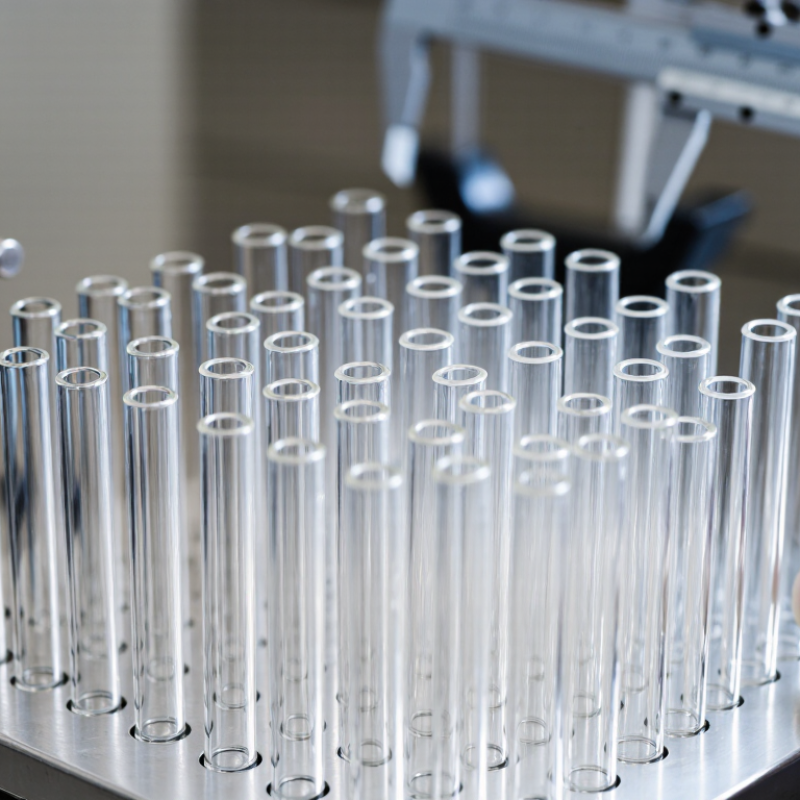
Silica Tubing Basics: High-Purity Grades Can Reach 99.99% SiO₂
Silica tubing is valued for its high temperature resistance, chemical stability, and low thermal expansion. High-purity grades can reach 99.99% SiO₂, but that figure describes composition, not every aspect of performance. The remaining fraction may include trace metals or other impurities. Small differences matter. In a furnace sight tube, for example, contamination can affect optical clarity or process consistency.
When comparing Chinese manufacturers and suppliers, ask how purity is measured and request a batch-specific certificate. Check whether the reported value comes from chemical analysis, and whether the test method and detection limits are stated. Ask for evidence. A catalog figure alone is not enough. Also confirm outer diameter, wall thickness, length tolerance, surface finish, and whether the ends are cut, ground, or fire-polished. These details affect installation and sealing.
The right grade depends on actual service conditions. A thin tube exposed to fast temperature changes may behave differently from a thick one in steady heating. Provide suppliers with the working temperature, atmosphere, and contact materials before requesting a specification. It is easy to focus on purity and overlook dimensional variation. That happens. Inspecting a sample under bright light can reveal chips, haze, or uneven walls, though visual checks cannot replace documented testing.
Key Material Properties: About 0.55 × 10⁻⁶ K⁻¹ Thermal Expansion
Silica tubing is often selected for processes where temperature changes can distort ordinary glass. A thermal expansion value near 0.55 × 10⁻⁶ K⁻¹ means the tube changes size very little as it heats or cools. That matters. In a 500 mm section, a 500°C temperature rise would produce only about 0.14 mm of expansion, assuming the stated coefficient applies across that range.
Low expansion can help maintain alignment in furnaces, optical assemblies, and laboratory systems. It may also reduce stress when temperature shifts are gradual. However, a small coefficient does not make tubing immune to thermal shock. Uneven heating, thick walls, surface scratches, and constrained fittings can still cause cracking. Real conditions are messier. Buyers should ask suppliers for the measurement range, dimensional tolerances, wall-thickness consistency, and test documentation. The quoted value may describe a typical material, not every finished tube. That distinction is easy to miss. Comparing samples under the intended heating cycle can reveal handling or fit issues that a specification sheet cannot.
China Top Silica Tubing Manufacturers and Suppliers? - Key Material Properties: About 0.55 × 10⁻⁶ K⁻¹ Thermal Expansion
Representative properties of fused silica (high-purity amorphous silica) tubing. Values are typical reference figures; actual specifications depend on material grade, temperature, test method, and product design.
| Property or specification | Typical value | Unit | Relevance to tubing selection |
| Mean coefficient of thermal expansion | About 0.55 × 10⁻⁶ | K⁻¹ | Very low expansion helps limit dimensional change during temperature cycling. The value is representative, not a universal guarantee for every grade or temperature range. |
| Density | About 2.20 | g/cm³ | Useful for estimating tubing mass and comparing material options. |
| Young’s modulus | About 72 | GPa | Indicates elastic stiffness; mechanical performance also depends on tube dimensions, surface condition, and mounting. |
| Poisson’s ratio | About 0.17 | Dimensionless | Describes the lateral strain response when the material is loaded longitudinally. |
| Thermal conductivity at room temperature | About 1.38 | W·m⁻¹·K⁻¹ | Relevant to heat transfer through the tube wall; the value varies with temperature and material grade. |
| Specific heat capacity near room temperature | About 703 | J·kg⁻¹·K⁻¹ | Useful in estimating the energy required to raise the temperature of the tubing. |
| Refractive index near 589 nm | About 1.458 | Dimensionless | Relevant to optical applications; refractive index depends on wavelength and material composition. |
| Strain point | About 1120 | °C | A reference temperature associated with very slow stress relaxation; it is not a recommended continuous-use temperature. |
| Annealing point | About 1215 | °C | A reference temperature used in glass stress-relief processes. Actual processing schedules depend on the grade and tube dimensions. |
| Softening point | About 1665 | °C | A standardized material reference point, not a design limit for loaded tubing or prolonged service. |
| Tube inside diameter relationship | ID = OD − 2 × wall thickness | Same length unit as OD and wall thickness | Use the specified outside diameter and wall thickness to determine nominal inside diameter; confirm tolerances with the product specification. |
Manufacturing and Quality Checks: Softening Point Near 1,665°C
China Top Silica Tubing Manufacturers and Suppliers?
Manufacturing and Quality Checks: Softening Point Near 1,665°C
Silica tubing is valued for handling intense heat, but its softening point needs careful interpretation. Near 1,665°C, the material begins to soften under specific test conditions; this is not a recommended continuous operating temperature. Actual performance depends on tube dimensions, heating rate, atmosphere, and mechanical load. A thin tube under stress may deform sooner than expected.
Reliable manufacturing checks start with consistent raw material and controlled forming. Inspectors can measure outer diameter, wall thickness, straightness, and surface finish. They also look for bubbles, inclusions, cracks, and signs of devitrification. For demanding applications, suppliers should explain their test methods and provide traceable inspection records. A temperature figure alone tells only part of the story. I have found that tolerances may look acceptable on paper, yet handling marks can still matter.
Tips: Confirm whether the quoted softening point comes from a recognized test method. Request sample tubing and verify fit, clarity, and dimensions before ordering larger quantities. Avoid treating the softening point as a safe-use limit. Small details matter.
Silica Tubing: Typical Thermal Reference Points
Typical fused silica reference temperatures are approximately 1,120°C at the strain point, 1,215°C at the annealing point, and 1,665°C at the softening point. Values vary with material composition and measurement method; they are material references, not supplier-specific quality results.
China’s Silica Tubing Supplier Landscape and Product Specialties
China’s silica tubing supplier landscape includes manufacturers focused on standard lengths and suppliers handling custom dimensions. Product specialties often range from clear fused-silica tubes to capillary tubing with narrow bores. Some suppliers also offer opaque tubing or tubes cut to specific lengths.
Details matter.
Buyers should compare outer diameter, wall thickness, bore tolerance, and end finish, not just the material description. A clean-looking tube can still have a bore that does not suit a flow or measurement setup.
For laboratory and industrial use, ask how the tubing is made and inspected. Useful details include dimensional checks, surface condition, and packaging that protects the ends from chips and dust. Suppliers may differ in their ability to handle small batches, tight tolerances, or repeat orders.
Requesting a sample can reveal practical issues, such as fitting clearance or brittle edges. Not always. A specification sheet may not show how easily a tube integrates with real equipment.
Clear communication about temperature, chemical exposure, and installation conditions helps narrow the options, though these details are sometimes overlooked on both sides.
How to Compare Manufacturers by Tolerance, Traceability, and Testing
When comparing silica tubing manufacturers, start with the dimensions your assembly actually needs. Request the allowable limits for outside diameter, inside diameter, and wall thickness, not just nominal values. Small differences matter. Ask how measurements are taken, including the instrument, sampling frequency, and inspection temperature. A tolerance is difficult to assess without its measurement conditions.
Traceability should connect each tube lot to its material batch and production records. Ask for a sample certificate showing lot identification, measured dimensions, and inspection date. Check whether records can be retrieved after delivery, and whether tubing from different production runs is kept distinct. A polished certificate can still leave gaps. It should be clear which results apply to your shipment.
Testing should reflect the tubing’s intended service, rather than a generic checklist. Depending on the application, request visual inspection results, dimensional data, and relevant pressure or thermal test methods. Ask whether tests cover every piece or a defined sample, and how measuring equipment is calibrated. Compare the actual report with your specification. If a supplier cannot explain an out-of-range result, pause before approving the lot. Sample reviews help, but they do not replace consistent production checks.