
Blog

What Are the Top Steel Prefab House Manufacturers in China?

Choosing a manufacturer for Steel Prefab Houses takes more than comparing attractive photos or headline prices. A strong shortlist should consider structural design, steel grade, corrosion protection, insulation, factory quality controls, and installation support. Ask for project references, sample drawings, material specifications, and a clear breakdown of what the quoted price includes. Details matter. A thin coating on a coastal project, for example, may deserve closer review than a polished showroom image.

Modular-construction researcher Dr. Ryan E. Smith’s work emphasizes coordination between design, off-site production, and site assembly. Put simply, factory precision cannot fix a poorly coordinated project. That principle helps frame any comparison of Chinese manufacturers. Look for evidence that the company can connect engineering decisions with production records and practical site requirements, not just promise fast delivery. Still, no single checklist settles every question. A supplier suited to a compact worker residence may not fit a family home with demanding insulation needs. Buyers should verify claims directly and compare like-for-like specifications. Some company details can also be hard to assess from a website alone. The guide below examines notable manufacturers through their products, capabilities, documentation, and communication, while recognizing that the best choice depends on the project. It is a useful starting point, not a substitute for technical review.
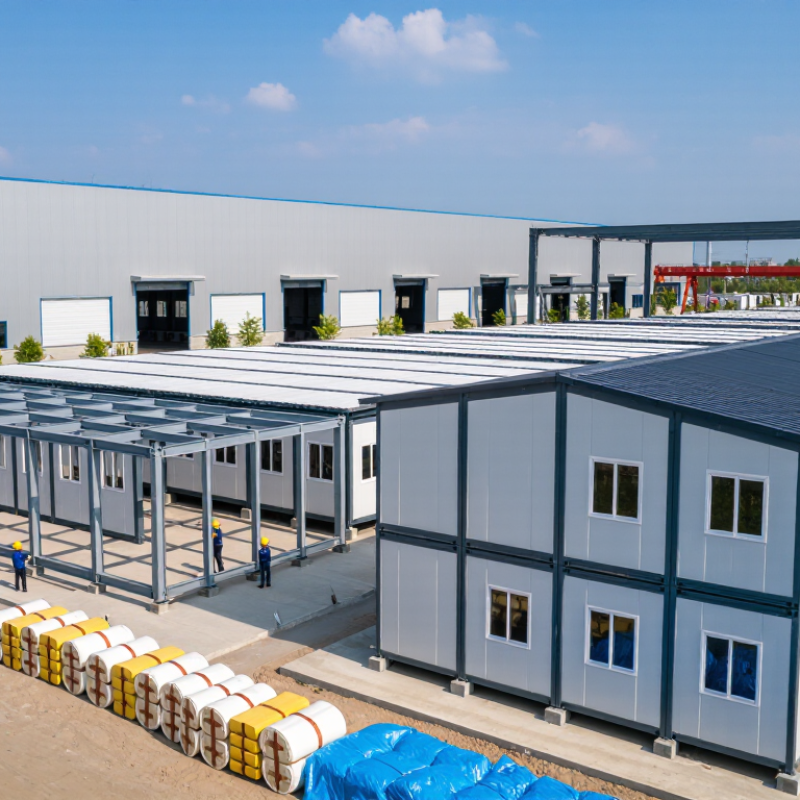
What Are the Top Steel Prefab House Manufacturers in China?

What Is a Steel Prefab House?

What Is a Steel Prefab House?

A steel prefab house is a home made from components manufactured off-site and assembled on a prepared plot. Its frame uses steel members, while walls, floors, and roof sections may arrive as panels or separate pieces. Some homes are largely completed in a factory; others involve substantial on-site work. That distinction matters. “Prefab” does not guarantee a fully finished, ready-to-live-in building.

Steel’s strength can support long spans and open interiors, but performance depends on more than the frame. Connections, corrosion protection, insulation, window seals, and foundation accuracy all affect durability and comfort. McKinsey’s 2019 report, Modular construction: From projects to products, estimates that modular construction can reduce project timelines by 20–50% and costs by up to 20%. These are potential gains, not promises for every project. Transport distance, site access, and design changes can reduce them. The term can be confusing, and specifications deserve close reading.

Tips: Ask for structural drawings, insulation values, corrosion-protection details, and a clear list of factory-finished components. Check the details. A neat steel frame is only one part of a reliable home.

How Is China’s Steel Prefab Housing Industry Organized?

China’s steel prefab housing industry is organized as a connected supply chain, not a single factory model. Some manufacturers design complete homes, while others focus on steel frames, wall panels, or modular units. Engineering teams translate floor plans into load calculations, connection details, and shop drawings. Fabricators then cut, drill, and weld steel members, often alongside insulation and cladding work. The handoff matters.

Many projects rely on regional suppliers and specialist contractors. A housing producer may source galvanized sections, windows, roofing, and interior fittings from separate firms. Finished modules travel by truck, so road access, lifting points, and transport dimensions shape the design early. Site crews assemble frames, seal joints, and connect utilities. Small coordination errors can delay several trades.

Reliable suppliers tend to provide traceable material records, clear drawings, and consistent factory inspections, rather than relying on attractive renderings alone. Buyers should check steel grades, coating thickness, wind and snow assumptions, fire performance, and what the quoted scope excludes. Factory visits can reveal practical details: weld consistency, storage conditions, and whether parts are labeled for installation. Still, quality varies, and paperwork does not guarantee careful work. That deserves scrutiny. Some projects also need local engineering review before production, a step that can be underestimated when schedules feel tight.

Which Companies Are Leading Steel Prefab House Manufacturers in China?

China’s leading steel prefab house manufacturers are usually those combining structural design, factory fabrication, and on-site installation. MOHURD’s 2022 national report recorded about 830 million square metresof newly started Prefabricated Buildings. That scale rewards suppliers who can manage repeatable production, not just sell steel frames. Look for documented welding procedures, material traceability, corrosion protection, and clear inspection records.

Industry reports from China’s construction metal-structure sector place annual steel-structure output above 100 million tonnes in recent years. High volume alone proves little. Strong manufacturers provide project-specific drawings, connection details, load calculations, and installation guidance. Ask how they handle a real detail: a roof beam meeting a wall panel, or a door opening requiring reinforcement. Details matter.

Compare the factory’s quality controls with the crew’s site experience. Check sample joints, coating thickness records, and packaging plans that prevent panels from arriving dented or wet. Request references for buildings with similar spans, climate, and use. A polished catalogue can still hide weak coordination. I would also treat delivery promises cautiously; shipping dimensions, customs handling, and local assembly can disrupt an otherwise sound schedule. No single public ranking settles the question, so compare verifiable project records and technical documents.

What Products and Services Do These Manufacturers Offer?

Chinese steel prefab house manufacturers commonly provide more than frames and panels. Their packages may include structural design, steel cutting and welding, wall and roof panels, doors, windows, and interior fittings. Some also coordinate transport, on-site assembly, utility layouts, and after-sales maintenance. Scope varies, so “turnkey” should be checked against a written list of inclusions.

The McKinsey report Modular Construction: From Projects to Products (2019) says modular methods can shorten project schedules by 20–50% and reduce costs by up to 20%. These are broad industry estimates, not guaranteed results for every steel house or supplier. Ask manufacturers for material grades, corrosion-protection details, wind and snow-load assumptions, shop drawings, and inspection records. A neat showroom is not proof of consistent production quality.

Tips: Request a sample wall or roof-panel specification, then compare thickness, insulation, fire performance, and connection details. Confirm who handles foundation work, permits, shipping, and installation. Get delivery milestones and warranty exclusions in writing. Small omissions matter. A quote may look complete while leaving site labor or electrical work outside the price.

What Are the Top Steel Prefab House Manufacturers in China? - What Products and Services Do These Manufacturers Offer?

Manufacturer Offering Typical Products Common Applications Engineering and Customization Related Services
Light-gauge steel housing systems Prefabricated wall frames, roof trusses, floor systems, and panelized house components Small homes, extensions, low-rise residential buildings, and site offices Layouts, openings, and component specifications can be adjusted to suit project requirements and local design conditions. Design coordination, component fabrication, packing, and installation guidance
Modular steel houses Factory-made room modules or larger volumetric units assembled from steel frames Temporary accommodation, worker housing, classrooms, and project facilities Module dimensions, room layouts, finishes, and building services can be configured for the intended use. Module production, delivery planning, on-site assembly support, and connection details
Container-style buildings Steel-framed modular units with wall, floor, and roof panels Portable offices, accommodation blocks, kiosks, and temporary facilities Options may include doors, windows, partitions, insulation, and interior fit-out. Unit fabrication, transportation preparation, installation instructions, and accessory supply
Portal-frame steel buildings Primary steel frames, roof and wall cladding systems, and associated components Workshops, warehouses, agricultural buildings, and other larger-span spaces Frame configuration and building dimensions are developed around the project brief, site conditions, and applicable design requirements. Structural detailing, steel fabrication, cladding supply, and erection support
Insulated panel building systems Steel-faced sandwich panels for roofs, walls, and partitions Prefabricated homes, offices, accommodation, and enclosed workspaces Panel thickness, surface finish, dimensions, and insulation core can vary by product specification. Panel production, cutting to project dimensions, packing, and installation guidance
Integrated project delivery Coordinated supply of structural frames, panels, doors, windows, and selected interior components Projects seeking a more complete prefabricated building package Scope depends on the supplier and contract; engineering is typically coordinated with project drawings and local requirements. Quotation support, shop drawings, manufacturing coordination, export packing, and technical assistance

Offerings vary by supplier and project. Confirm structural design responsibility, applicable local codes, material specifications, transport arrangements, installation scope, and warranty terms before purchase.

How Can Buyers Compare Chinese Manufacturers?

When comparing Chinese steel prefab house manufacturers, begin with the project, not a catalog. Share the intended use, site conditions, floor plan, insulation needs, and expected service life. Ask each supplier to quote the same scope. Otherwise, a low price may simply omit stairs, fire-rated panels, or installation support.

Review technical evidence closely. Request structural calculations, material grades, coating specifications, connection details, and drawings that match the quotation. Check how the company addresses wind, snow, seismic loads, and corrosion at your site. Details matter. Ask for recent project references and, where practical, arrange a factory visit or live production review. Look at cutting, welding, surface treatment, and packing—not only the finished sample. A polished sample can hide uneven workmanship.

Compare production capacity, inspection records, lead times, spare-part availability, and warranty exclusions in writing. Ask who coordinates shipping and site assembly, and what happens when dimensions change. Request a sample contract and clarify payment milestones before committing. Ask for proof. Independent inspection before dispatch can help, especially for first-time buyers. Still, audits and certificates cannot guarantee smooth delivery; communication and documented change control matter too. I would not treat the cheapest quote as the best value, but a higher quote also needs line-by-line checking. Some details may still be missed.

Comparing Steel Prefab House Manufacturers: Steel Grade Benchmark

Compare the structural steel grades specified in each manufacturer’s design documents. The bars show the minimum yield strength for S235, S275 and S355 steel at nominal thicknesses up to 16 mm, based on EN 10025-2. Higher strength alone does not determine overall building quality; also check engineering calculations, corrosion protection, fabrication quality and project-specific documentation.

Benchmark: EN 10025-2 minimum yield strength for nominal thickness ≤16 mm. Verify the applicable standard, steel thickness and test certificates with the supplier.

By continuing to use the site, you agree to the use of cookies. more information

The cookie settings on this website are set to "allow cookies" to give you the best browsing experience possible. If you continue to use this website without changing your cookie settings or you click "Accept" below then you are consenting to this.

Close