
Electronic assemblies often face moisture, vibration, dust, and temperature changes. Electronic Pouring Sealants protect circuit boards and components by filling gaps and creating a stable barrier. The right formulation depends on the device, its operating environment, and repair requirements. A sealant suitable for a sensor may not work well in a power module.
Several material families appear in practical designs. Epoxy compounds provide strong adhesion and rigid protection, especially where mechanical stability matters. Silicone compounds remain flexible across temperature changes and can reduce stress around delicate parts. Polyurethane options balance flexibility and toughness, though moisture control during processing deserves attention. Some products also offer thermal conductivity or UV curing for specialized production needs. Details matter.
This guide compares these main types by performance, processing, and typical applications. It also considers viscosity, cure time, heat transfer, electrical insulation, and compatibility with plastics or metals. Check technical data sheets, then test shortlisted materials on representative assemblies. Small batches can reveal trapped air, poor wetting, or unexpected component stress before full production. No single chemistry suits every application. That is easy to overlook. Selection should reflect measured conditions, not broad product claims. Component geometry, dispensing equipment, and operating temperatures can all change the result. When failure would be costly, a qualified materials engineer can help confirm suitability.
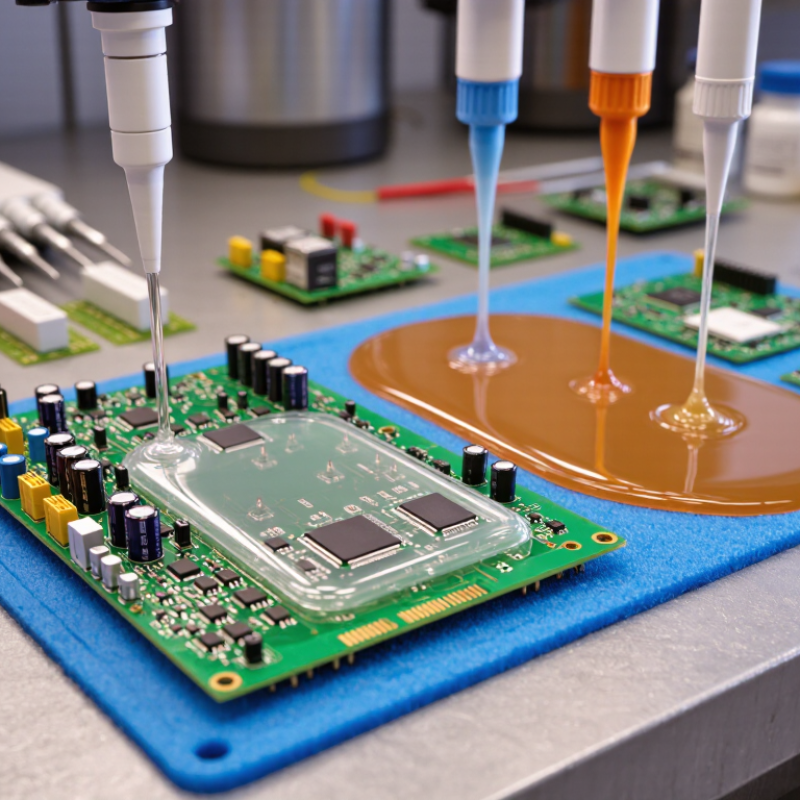
Electronic potting sealants protect components by surrounding them with a solid or flexible barrier. The cured material helps limit moisture, dust, vibration, and accidental contact with conductive debris. Inside a compact sensor, it can fill the narrow space between a circuit board and its enclosure. Small gaps matter. A poorly filled corner may still become a path for moisture.
The right chemistry depends on the component and its operating conditions. Epoxy often offers firm support, while silicone can accommodate movement and temperature changes. Polyurethane may provide a balance of flexibility and protection. None is automatically best. A rigid fill can stress solder joints when materials expand at different rates, and excess heat during curing may harm sensitive parts. NASA’s ASTM E595 screening criteria use limits of 1.0% total mass loss and 0.10% collected volatile condensable material for spacecraft materials. These figures are useful when low-outgassing performance matters, but they are not universal requirements for commercial electronics. Test the complete assembly, not just a resin sample. Check cure depth, adhesion, thermal cycling, and repair needs; a sealant that protects well may also make later rework difficult.
Silicone potting compounds are a useful type of electronic pouring sealant when a circuit needs cushioning and heat tolerance. Once cured, silicone stays flexible rather than becoming a hard shell. That flexibility helps absorb vibration around solder joints and reduces stress as temperatures rise and fall. It can also resist moisture, dust, and many common environmental exposures. Still, silicone is not a universal fix. Its softness may provide less mechanical support than rigid resin, and compatibility with nearby materials should be checked.
In practical use, a technician may dispense the compound around a sensor, connector, or power component, then cure it according to the product’s technical data sheet. Check the operating temperature range, viscosity, cure time, and adhesion before production. Thick material may trap air around pins. That matters. Small voids can leave paths for moisture or reduce heat transfer. For heat-producing parts, assess the compound and enclosure together. “Heat-resistant” does not mean thermal design can be ignored.
Tips: Clean and dry the assembly before pouring. Test a small sample on the actual wire insulation and housing, then inspect it after curing. If the part faces repeated heating and cooling, run a thermal-cycle test. Results can be imperfect, so record what changed and adjust the process; one successful trial does not prove long-term reliability.
Epoxy potting compounds create a rigid barrier around sensitive electronic parts. Once cured, they can help limit damage from vibration, dust, and moisture. They are often used to secure circuit boards, sensors, and cable connections inside housings. The cured material also supports components that might otherwise shift under repeated movement. A firm shell has trade-offs, though. It may make later repair difficult, and stress from different expansion rates can affect delicate parts.
Tips: Check the product data sheet for the correct mix ratio and curing conditions. Measure carefully; small errors can leave soft or uneven areas. Keep parts clean and dry, and test the process on a sample assembly before filling a valuable device. Watch for trapped air around tall components.
A practical trial helps reveal details that specifications cannot. For example, a small bubble beside a connector may seem harmless, yet it can leave a weak spot. Slow, steady pouring and suitable venting can reduce this risk. Epoxy is not automatically the right choice for every assembly: heat, service access, and component sensitivity matter. Sometimes a less rigid material deserves consideration, even when epoxy seems tougher.
| Epoxy Potting Compound Type | Typical Characteristics | Common Applications | Key Advantages | Design Considerations |
|---|---|---|---|---|
| General-purpose rigid epoxy | Cures to a hard, dimensionally stable encapsulant; commonly used for electrical insulation and component protection. | Power supplies, transformers, sensors, and electronic modules. | Good adhesion and durable protection against moisture, dust, and mechanical damage when correctly selected and processed. | Its rigidity can transfer stress to components during thermal cycling; check compatibility with the assembly and cure process. |
| Thermally conductive epoxy | Contains thermally conductive fillers; conductivity and flow behavior depend on filler type, loading, and formulation. | Power electronics, LED assemblies, and components that need heat transfer to a housing or heat spreader. | Can provide both encapsulation and a heat-transfer path. | Higher filler loading can increase viscosity and affect dispensing, void removal, and coverage; verify electrical properties if insulation is required. |
| Flame-retardant epoxy | Formulated to meet specified flammability requirements; performance depends on the exact formulation, thickness, and test method. | Electronic assemblies where fire-safety requirements apply, including power and control equipment. | Can combine encapsulation with a defined flammability performance target. | Confirm the required rating and test conditions for the finished application; a rating should not be assumed from resin type alone. |
| Low-viscosity epoxy | Designed to flow into narrow gaps and around closely spaced components before curing. | Compact assemblies, fine-pitch components, and parts with limited access for dispensing. | Can improve wetting and help fill intricate spaces when the assembly and process are suitable. | Check for leakage, trapped air, component movement, and compatibility with plastics, coatings, and other materials. |
| High-temperature or high-glass-transition-temperature epoxy | Selected for applications that require retention of properties at elevated temperatures; glass-transition temperature and service limits are formulation-specific. | Electronics exposed to elevated operating temperatures or demanding thermal environments. | Can offer improved thermal performance when properly cured and used within its specified limits. | Review cure requirements, thermal expansion, and the specified continuous-use temperature; these properties are not interchangeable. |
Note: Characteristics vary by formulation and curing conditions. Check the technical data and test requirements for the specific assembly and operating environment.
Polyurethane potting compounds suit electronics that need both adhesion and movement tolerance. Their cured resin can grip connectors, coils, and circuit boards while absorbing vibration. That helps. A small control module, for example, may face repeated jolts and damp air inside a vehicle. Flexible polyurethane can reduce stress around solder joints compared with a rigid encapsulant, though the result depends on formulation and cure quality.
More vehicle electronics make reliable encapsulation increasingly relevant, but polyurethane is not a universal fix. Heat can accelerate aging, and some formulations absorb moisture or soften under sustained exposure. Not always. Engineers should compare the compound’s thermal range, dielectric properties, and adhesion on the actual substrate. ASTM D2240 measures durometer hardness, while IEC 60243-1 provides a method for testing electrical insulation strength. Those tests help, but a neat lab coupon cannot fully reproduce a crowded enclosure, sharp edges, or imperfect dispensing. A short trial on the real assembly is often the part teams regret skipping.
Choosing a potting sealant starts with the assembly, not the product category. Epoxy often suits rigid protection and strong adhesion, while silicone accommodates vibration and temperature changes. Polyurethane can offer a useful balance of flexibility and protection. These are tendencies, not guarantees. Small details matter.
Tips: Check the service temperature, moisture exposure, electrical insulation needs, and material compatibility. Compare viscosity with the gaps around wires and components. A thick compound may trap air beneath a connector. Confirm cure time and depth, too; a surface that feels firm may hide uncured material below.
Think about repair needs before potting. Rigid compounds can make later component replacement difficult, while softer materials may be easier to remove but provide different mechanical support. Review the technical data sheet, then test the sealant on a representative assembly. Look for bubbles, poor adhesion, or stress around solder joints after curing and temperature cycling. Bench results can still miss real operating conditions, so allow for that uncertainty. The right choice depends on the whole assembly, including its enclosure, materials, and maintenance plan.
Representative operating-temperature ranges for common sealant chemistries (°C)
Silicone is often selected for a broad temperature range and flexibility; epoxy for rigid, protective encapsulation; polyurethane for flexibility and impact resistance; and acrylic for fast curing. These ranges are representative, not specifications—check the selected product’s datasheet and consider operating temperature, flexibility, electrical requirements, cure process, and chemical exposure.
By continuing to use the site, you agree to the use of cookies. more information
The cookie settings on this website are set to "allow cookies" to give you the best browsing experience possible. If you continue to use this website without changing your cookie settings or you click "Accept" below then you are consenting to this.