
Blog

What Are the Top Types of Trimless Spotlights in 2026?

In 2026, Trimless Spotlights remain a popular choice for interiors that call for clean ceilings and discreet lighting. Their plaster-in design hides the visible trim, leaving a small aperture and a focused beam. The result can look seamless. But the finish depends on careful installation, compatible plasterwork, and precise positioning—not just the fitting itself.

This guide explores the main types, including fixed downlights for general illumination, adjustable gimbal spotlights for directing light, and wall-washing models for highlighting vertical surfaces. Miniature versions suit shelves and compact spaces, while deeper-recessed designs can help reduce glare. Some products also carry ratings for particular ceiling or building conditions; check the manufacturer’s specifications rather than assuming one model fits every project.

Each type serves a different purpose. A narrow beam can bring out the texture of a painting, yet feel harsh when aimed poorly. Wider beams spread light more evenly, though they may offer less emphasis. Small choices matter. The right option depends on ceiling depth, room use, desired beam angle, and dimming compatibility. These details are easy to overlook. They are also where plans sometimes go wrong.

The sections ahead compare practical strengths, limitations, and selection points for each spotlight style. Product names and installation requirements vary, so verify dimensions and maintenance access before ordering. A trimless look is appealing, but it is not automatically the best fit for every ceiling.
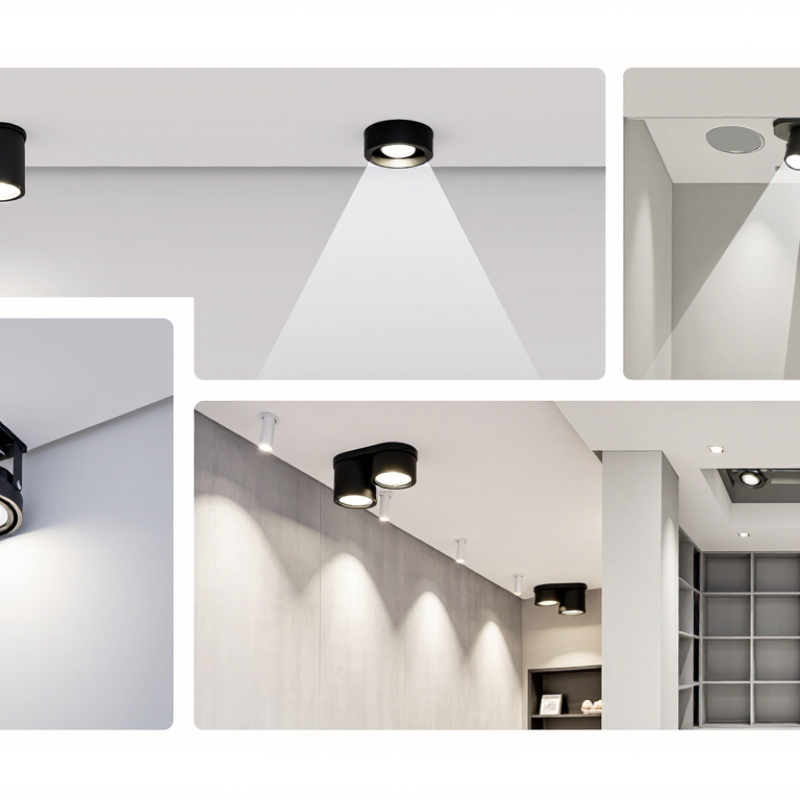
What Are the Top Types of Trimless Spotlights in 2026?

How Trimless Spotlights Are Classified by Design and Function

What Are the Top Types of Trimless Spotlights in 2026?
How Trimless Spotlights Are Classified by Design and Function

Trimless spotlights are usually classified by how they aim light and what they illuminate. Fixed models point straight down, creating clean pools of light for hallways or general lighting. Adjustable versions tilt or rotate, making them useful for artwork, shelving, or changing room layouts. Wall-wash models spread light across a vertical surface rather than concentrating it in one spot. Linear and multi-light designs group several light sources together for broader, more even coverage.

Function matters as much as shape. A narrow beam can emphasize a framed picture, while a wider beam suits a kitchen counter or reading area. Deep-set optics can help reduce direct glare, though the result depends on ceiling height and viewing angles. Trimless fixtures sit flush with a finished surface, but installation needs compatible plaster-in components and careful coordination with the ceiling system. A seamless look is not automatic; uneven finishing can leave visible edges.

Tips: Match beam angle to the target, and check the fixture’s cut-out and installation depth before specifying it. For a small room, test the light position with a sample layout. It may still feel too bright.

Top Types of Trimless Spotlights in 2026

Typical beam-angle ranges by design and function

Fixed and adjustable spotlights provide general directional lighting; pinhole designs create a more focused beam, while wall washers spread light across vertical surfaces. Deep-recessed designs help reduce direct glare. Beam-angle ranges are representative, not standardized, and vary by product and optic.

Fixed Trimless Spotlights for Focused, Directional Lighting

What Are the Top Types of Trimless Spotlights in 2026?

Fixed Trimless Spotlights for Focused, Directional Lighting

Fixed trimless spotlights sit flush with the ceiling, keeping attention on the light rather than the fitting. Their fixed beam makes them useful for highlighting a kitchen island, artwork, or a textured wall. In a hallway, several carefully spaced spots can guide movement without filling the ceiling with visible rims. Beam angle matters: a narrow beam creates a crisp pool of light, while a wider beam softens the edges. Check the manufacturer’s photometric data before choosing; the same wattage can produce very different results.

LEDs are a practical choice for these fixtures. The U.S. Department of Energy’s Energy Saver guidance reports that residential LEDs use at least 75% less energy and can last up to 25 times longer than incandescent lighting. Those figures compare LED bulbs with incandescent bulbs, not every spotlight fixture, so treat them as context rather than a guaranteed project saving. One drawback deserves attention: fixed beams are less forgiving after installation. A spot aimed a few degrees off can leave a wall feature looking oddly flat.

Tips: Mark target points before cutting ceiling openings. Test the beam at night, then adjust spacing if possible. Warm-white light often suits living areas; cooler light can make detailed work easier. Don’t overlight every surface. A little shadow can help a room feel natural.

Adjustable Trimless Spotlights for Flexible Beam Control

What Are the Top Types of Trimless Spotlights in 2026?

Adjustable trimless spotlights suit rooms where the light needs to move with changing layouts or tasks. Their plaster-in frames sit flush with the ceiling, while an adjustable inner head directs the beam. Common options include gimbal spotlights, tilting recessed spotlights, and adjustable wall-wash models. Each offers a different balance of aim, beam spread, and visual comfort.

A gimbal head can swivel toward a reading chair, artwork, or kitchen counter without shifting the fixture itself. Tilting models are useful for angled beams, but check their adjustment range before specifying them. Wall-wash versions spread light across a surface, helping reduce harsh patches on textured walls. That matters. A narrow beam can look dramatic, yet it may leave nearby areas dim. Installation also deserves care: plaster thickness, ceiling depth, and driver access can affect the finished result. Details are easy to overlook.

Tips: Sketch the intended beam direction on the ceiling before installation. Confirm the spotlight’s tilt angle and beam spread against the room’s size. Leave access to the driver where practical. Small errors show. Even a well-made fitting may need repositioning if furniture or artwork changes later.

Deep-Recessed Trimless Spotlights for Low-Glare Illumination

Deep-recessed trimless spotlights hide their aperture in the ceiling, keeping the light source out of direct view. This can reduce harsh brightness when people enter a room or look across a ceiling. The effect depends on more than recess depth: beam angle, aiming, ceiling height, and wall reflectance all matter. A narrow beam can still create bright hotspots on a pale wall. Subtle, but noticeable.

The EN 12464-1 workplace lighting standard commonly uses a Unified Glare Rating limit of 19 for office tasks. Treat that as a design reference, not a promise that every recessed spotlight will meet it. UGR depends on the room layout and viewing position; a fixture’s product sheet alone cannot establish the result. Specify shielding depth and beam distribution, then check a lighting simulation or mock-up from seated eye level. CIE 117 describes the UGR method used to assess discomfort glare.

Tips: Aim the beam at artwork or a task surface, not directly toward seating. Compare the lit ceiling at night. If the aperture still catches your eye, deeper shielding or a different aiming angle may help. The trimless finish looks clean, but installation tolerances can be unforgiving; a slightly uneven plaster edge is hard to ignore.

Trimless Wall Washers for Even, Vertical Lighting

Trimless wall washers hide their frame while directing light down a wall, making them useful for galleries, hallways, and textured finishes. The best types use asymmetric optics rather than a standard narrow spotlight lens. This spreads light vertically and reduces bright pools near the ceiling. A recessed, plaster-in flange keeps the ceiling line visually clean. The effect is subtle. Until the wall shows every uneven patch.

Plan fixture offset and spacing together. Too close to the wall can create a bright scallop; too far away may leave the upper wall dim. Check the photometric plan, ceiling height, beam distribution, and intended mounting position before cutting openings. Matte paint usually softens glare, while glossy finishes can reveal reflections. Aim for consistent vertical illumination, but inspect a full-size mock-up when the finish or wall geometry is unusual. That step is easy to skip.

Efficiency matters, too. The U.S. Department of Energy’s Energy Saver guidance reports that LED lighting uses at least 75% less energy and can last up to 25 times longer than incandescent lighting. Those figures describe LEDs broadly, not every trimless fixture, so compare fixture-level efficacy and lifetime data. Good optics still matter. A poorly placed efficient light can make a wall look worse.

What Are the Top Types of Trimless Spotlights in 2026? - Trimless Wall Washers for Even, Vertical Lighting

Spotlight Type Optical Design Typical Beam or Distribution Best-Suited Use Planning Guidance Key Consideration
Fixed Trimless Downlight Recessed light source with a plaster-in flange and fixed orientation Commonly 24°–60° beam angles General ambient lighting and evenly spaced ceiling layouts Set spacing according to ceiling height, beam angle, and required illuminance Cannot be aimed after installation; precise positioning matters
Adjustable Trimless Spotlight Tilting or swiveling lamp module recessed into a trimless aperture Often 15°–40° beam angles, depending on the optic Accent lighting for artwork, displays, and architectural details Aim the beam to limit glare and avoid unwanted reflections Check aiming range and whether adjustment remains accessible
Trimless Wall Washer Asymmetric reflector or lens directs light down the wall from near the ceiling Broad, asymmetric vertical distribution rather than a conventional circular beam Even illumination of plain walls, textured finishes, and vertical surfaces A starting point is roughly 300–600 mm from the wall; confirm with the fixture photometry and ceiling height Spacing and setback affect scallops, bright spots, and uniformity
Adjustable Wall Washer Aimable module with a wide or asymmetric optic Wide vertical spread with an adjustable direction Walls with changing layouts, shelving, or features that need flexible aiming Mock up the setback and spacing when wall height or surface details vary A standard adjustable spot optic may not produce a smooth wall-wash effect
Deep-Recessed Trimless Spotlight Light source sits farther back in the housing to reduce direct view of the LED Available with a range of spot and flood optics Living areas, hospitality spaces, and other settings where visual comfort is important Review the cut-out, ceiling depth, and aiming clearance before specifying A deeper housing can require more ceiling space
Trimless Pinhole Spotlight Small aperture conceals much of the light source within the ceiling Typically a narrow or medium accent beam Minimalist interiors and discreet highlighting of selected objects Use fewer, well-aimed points rather than relying on them for broad ambient coverage Small apertures can create concentrated pools of light
Trimless Linear Wall Washer Continuous or modular recessed linear optic distributes light along a wall Broad, continuous vertical distribution Long feature walls, corridors, and surfaces where a continuous effect is desired Coordinate module length, joints, and wall offset before setting out the ceiling Continuous output depends on careful alignment and compatible modules

Note: Beam distributions and installation distances are typical design references, not fixed standards. Confirm final spacing, setback, glare control, and uniformity using the selected luminaire’s photometric data and a project-specific lighting plan.

By continuing to use the site, you agree to the use of cookies. more information

The cookie settings on this website are set to "allow cookies" to give you the best browsing experience possible. If you continue to use this website without changing your cookie settings or you click "Accept" below then you are consenting to this.

Close