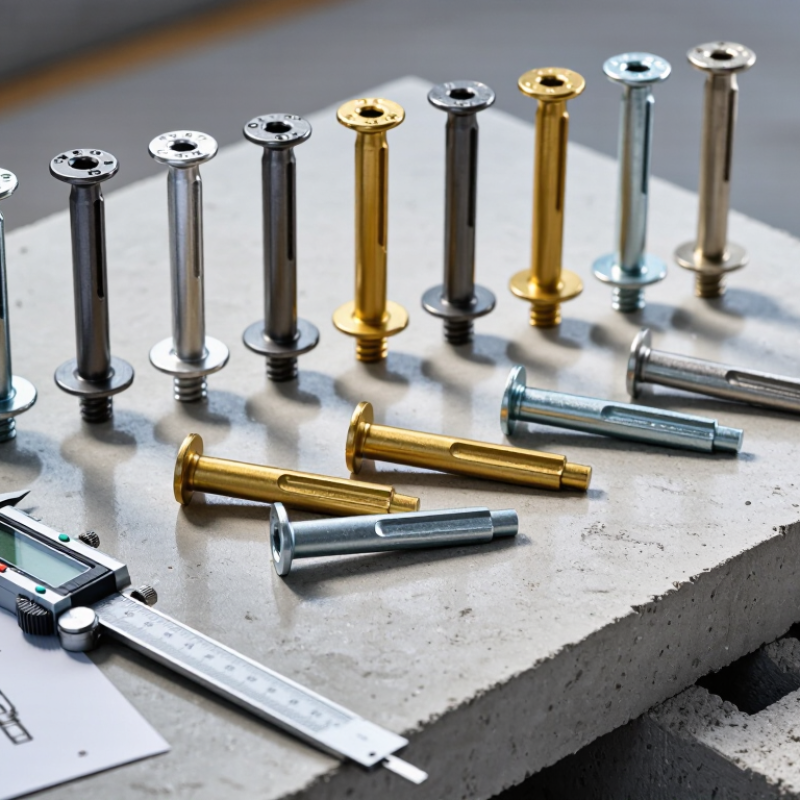
Global buyers often compare wedge anchors by material, coating, diameter, embedment, and base material. The differences can look small on a product sheet. On site, a few millimeters of embedment or a dusty drilled hole can change installation performance. This guide examines ten common wedge anchor types and the conditions each is designed to suit.
A wedge anchor expands against the sides of a drilled hole as its nut is tightened. That simple action depends on sound concrete, correct hole dimensions, and careful installation. Buyers should check manufacturer data, load ratings, corrosion protection, and applicable project requirements. No single anchor fits every job. Sometimes the product choice is less tidy than a catalogue suggests.
“An anchor is only as dependable as its substrate, installation, and verified performance data.” — [Insert a named wedge-anchor expert and confirm this quotation before publication.] This is a proposed editorial line, not a verified statement from a real expert. Naming someone without a reliable source would undermine the trust this guide aims to earn. Use the ten types below as a practical comparison, then confirm suitability with the manufacturer’s technical documentation and a qualified design professional.
A wedge anchor is a mechanical fastener designed to secure fixtures in solid concrete. It typically has a threaded steel stud, a tapered cone at its lower end, and an expansion clip around the cone. A nut and washer sit above the fixture. The concrete is drilled to the specified diameter and depth, then the anchor is inserted into the hole.
As the nut is tightened, the stud rises slightly and draws the cone into the expansion clip. The clip presses outward against the concrete walls, creating friction and holding the anchor in place. That matters. Too little embedment or an oversized hole can reduce holding strength, even when the anchor feels firm by hand.
The concrete base must be sound and thick enough for the selected anchor. Check for nearby edges, existing cracks, and other anchors; these can affect performance. The core parts work together, but the concrete is part of the connection too. Installation details are easy to underestimate. Follow the specified hole depth, cleaning method, embedment, and tightening torque, and confirm that the anchor is suitable for the concrete condition and intended load.
Common nominal diameters shown in inches and millimeters. Metric values are inch-to-millimeter conversions; availability varies by manufacturer and market.
How wedge anchors work: A wedge anchor is installed in a pre-drilled hole in solid concrete. Tightening the nut pulls the stud upward, driving the expansion clip against the hole wall to create a mechanical hold. Core parts typically include the threaded stud, expansion clip, nut, and washer. Diameter alone does not indicate load capacity; embedment, concrete conditions, edge distance, and product approval also matter.
Wedge anchors are easiest to compare by steel grade, surface finish, stainless alloy, and head design. These labels overlap. A zinc-coated anchor may also use carbon steel and have a hex head. Treat each category as a selection clue, not a separate, exclusive design. Concrete strength, embedment depth, edge distance, and verified load data also matter.
By steel grade, buyers may find low-carbon steel and higher-strength carbon steel anchors. By finish, options include plain steel, electroplated zinc, hot-dip galvanized, and mechanically galvanized anchors. Finish thickness and process can affect corrosion resistance and installation fit, so check product specifications. Stainless choices include Type 304 and Type 316. Type 316 generally offers better resistance to chlorides, but exposure conditions still require careful review. Request material and performance documentation.
Head design adds hex-head and round-head anchors. Hex heads accept a wrench and remain visible; round heads may provide a lower-profile appearance. These ten useful labels cover two steel grades, four finishes, two stainless alloys, and two head styles. Not a perfect taxonomy. One anchor can fit several groups, so compare dimensions, approved loads, and installation instructions before ordering.
For wedge anchors, 304 stainless steel is often identified as 18/8, referring to its approximate chromium and nickel content. It suits many indoor and mildly corrosive settings, such as dry warehouses or covered equipment rooms. A clean surface can be reassuring. But appearance alone cannot predict service life.
Grade 316 contains about 2% molybdenum, which improves resistance to pitting corrosion, especially where chlorides are present. That can matter near coastlines, in parking structures exposed to de-icing salts, or around frequent washdowns. It is not corrosion-proof. Salt deposits trapped around an anchor can still cause trouble, and poor drainage may shorten service life. The upgrade also usually costs more, so specifying 316 everywhere may not be the best use of a project budget.
A common purchasing mistake is comparing alloy grades while overlooking the concrete and installation conditions. Check the anchor manufacturer’s technical data for the approved base material, embedment depth, and load limits. Then consider exposure, cleaning chemicals, and whether the fastener will remain wet. A small sample installation can reveal handling or fit issues before crews install dozens of anchors. Even so, one site test cannot replace engineering review for critical connections.
When comparing wedge-anchor options for global projects, diameter and finish are only part of the decision. ACI 318 Chapter 17 requires checks for the connection’s relevant limit states. Record load direction, anchor spacing, edge distance, embedment, and concrete condition. Field measurements matter. A hole drilled too close to a slab edge can reduce concrete capacity, even when the anchor itself looks substantial.
Check steel strength in tension and shear, then evaluate concrete breakout in the relevant direction. For tension, include pullout; for shear, assess pryout where applicable. These failure modes are not interchangeable, and the lowest design strength can control. Use applicable code equations, strength-reduction factors, and installation assumptions. A catalog rating is not a project-specific calculation. Easy to miss.
Cracked concrete, reinforcement, fixture stiffness, and group effects can change the result. Verify approval documents and installation instructions, including drill-bit size, hole cleaning, and tightening method. Dust left in a hole or uneven torque can undermine a careful design. A clean drawing can still meet rough concrete. That deserves a second look. Document assumptions, and have a qualified engineer review unusual loads, close edge distances, or multiple anchors sharing a plate.
When comparing wedge anchors, global buyers should look beyond diameter, finish, and price. Confirm that the exact anchor model has an ICC-ES evaluation report based on AC193. Check the report’s scope, including anchor sizes, base material, cracked or uncracked concrete, and any seismic conditions relevant to the project. A report for one configuration does not automatically qualify every size or variation. Small details matter.
Embedment and installation torque must match the product-specific instructions and evaluation report. These values can change with anchor diameter, effective embedment, concrete strength, and installation conditions. Check the required hole diameter and depth, too. Dust left in a drilled hole can affect installation, while excessive torque may damage threads or compromise performance. I would not rely on a generic chart when the project documents specify different values. It is worth checking the latest report and instructions before ordering, especially when sourcing across markets.
Tips: Ask for the current evaluation report and installation instructions for the exact model. Compare specified embedment and torque with the project drawings. Use a suitable torque wrench, and verify hole depth before setting the anchor. If documents conflict, pause and request clarification rather than guessing.
The categories below describe common wedge-anchor materials and configurations; they are not a standardized ranking. ICC-ES AC193 qualification is specific to an evaluated anchor product and its stated conditions of use. Do not assume that every anchor in a category is qualified.
| # | Anchor type or configuration | Material / finish | Typical selection considerations | Dimensions and installation data to verify | ICC-ES AC193 checks |
|---|---|---|---|---|---|
| 1 | Zinc-plated carbon-steel wedge anchor | Carbon steel with an electroplated zinc coating | Common choice for many interior applications where the exposure conditions are suitable for the specified coating. | Confirm diameter, length, fixture thickness, minimum embedment, hole diameter, and installation torque in the product documentation. No universal torque or embedment applies. | Check the evaluation report for the exact product, size, concrete condition, and permitted use; do not infer qualification from the finish. |
| 2 | Hot-dip galvanized carbon-steel wedge anchor | Carbon steel with a hot-dip galvanized coating | Consider where a thicker zinc coating is specified; suitability depends on the actual environment and the complete assembly. | Verify that the specified coating is available for the exact diameter and length. Follow the product-specific hole, embedment, and torque instructions. | Confirm that the report covers the coated version being purchased. A coating specification alone is not evidence of AC193 qualification. |
| 3 | Mechanically galvanized carbon-steel wedge anchor | Carbon steel with a mechanically applied zinc coating | A coated-steel option whose specified coating thickness and application should be checked against the project requirements. | Check the exact coating specification, diameter, length, effective embedment, and installation torque in the applicable product documentation. | Match the evaluation report to the exact anchor finish and size. Do not substitute a different galvanized finish without approval. |
| 4 | Type 304 stainless-steel wedge anchor | Austenitic stainless steel, commonly identified as Type 304 or an applicable equivalent grade | May be considered for corrosion-sensitive settings; actual resistance depends on exposure, crevices, contaminants, and the full fastener assembly. | Confirm the stated stainless grade, diameter, length, and product-specific installation values. Stainless versions may have different availability and capacities than carbon-steel versions. | Verify that the report lists the stainless-steel model and relevant size. Do not transfer carbon-steel design values to a stainless version. |
| 5 | Type 316 stainless-steel wedge anchor | Austenitic stainless steel, commonly identified as Type 316 or an applicable equivalent grade | Often considered for more demanding corrosion exposures than general-purpose stainless grades; project-specific corrosion assessment is still necessary. | Confirm grade certification, dimensions, minimum embedment, and required torque for the exact model. Do not treat “316” as a guarantee of suitability for every environment. | Check the applicable report for the 316 model and size, including any limits on concrete strength, edge distance, spacing, or use. |
| 6 | Cracked-concrete-qualified configuration | Material and finish depend on the evaluated product | For designs that require an anchor evaluated for use in cracked concrete. The design must also account for the applicable load and installation conditions. | Use the report’s listed diameter, effective embedment, concrete strength range, edge distances, spacing, and installation torque. | Confirm that cracked-concrete use is explicitly covered for the selected model and size; not every wedge anchor has this qualification. |
| 7 | Seismic-qualified configuration | Material and finish depend on the evaluated product | For applications where seismic design requirements apply; qualification and design parameters are specific to the product and stated conditions. | Verify the listed seismic use, anchor size, embedment, concrete condition, and installation torque. Confirm design assumptions with the project engineer. | Check the evaluation report for the applicable seismic qualification and its limitations. “Seismic” should not be assumed from anchor type alone. |
| 8 | Short or reduced-length wedge anchor | Material and finish depend on the product line | May suit a limited fixture or base-material thickness when the required design capacity and embedment can be met. | Compare total anchor length with fixture thickness and required embedment. A shorter anchor does not automatically qualify for shallow embedment. | Use only the minimum embedment and torque listed for that exact model and size in its evaluation report and installation instructions. |
| 9 | Long-thread or extended-thread configuration | Material and finish depend on the product line | Can provide more thread length for fixture thickness or adjustment, subject to the anchor’s evaluated installation limits. | Check usable thread, fixture thickness, washer and nut arrangement, minimum embedment, and required torque. Extra thread does not increase allowable capacity by itself. | Verify that the threaded configuration and size are covered by the report; use the report’s values rather than values from a similar-looking anchor. |
| 10 | Large-diameter or heavy-duty wedge anchor | Material and finish depend on the evaluated product | Consider for higher-demand applications only after structural design checks; capacity depends on anchor size, embedment, concrete, spacing, and edge conditions. | Confirm exact diameter and length, drill-bit size, minimum embedment, hole cleaning requirements, and installation torque. Larger size alone does not establish capacity. | Check the report’s listed size range and design limitations, including concrete strength, cracked-concrete status, spacing, and edge distance. |

Buyer verification checklist
Note: Nominal diameters and lengths vary by product and market. This table intentionally does not provide generic embedment or torque figures because those values must come from the applicable evaluation report and product-specific installation instructions.
By continuing to use the site, you agree to the use of cookies. more information
The cookie settings on this website are set to "allow cookies" to give you the best browsing experience possible. If you continue to use this website without changing your cookie settings or you click "Accept" below then you are consenting to this.