
A 16a Switch is designed to control electrical circuits rated up to 16 amperes, when the switch and installation are suitable for the specific load. You may see one controlling a water heater, lighting circuit, or other fixed appliance. The rating matters. It is not a promise that every 16-amp switch suits every device. Load type, voltage, wiring, and installation conditions all affect the choice.
Electrical educator Mike Holt’s safety guidance can be summarized this way: “Match the switch to the circuit, the load, and the installation—not just the appliance label.” This is a paraphrase, not a verbatim quotation. In practice, check the switch’s markings and the appliance specifications. A motor or heating element can place different demands on contacts, even when both use similar current. A loose connection can also create heat behind a wall plate. Small details matter.
A qualified electrician can confirm the circuit rating, conductor size, and required switch type. Follow the manufacturer’s instructions and applicable local requirements. Never assume that a higher amp rating makes a switch a safe replacement; the circuit and wiring must remain properly protected. If the label is unclear, pause and verify it. That is worth the extra minute. This introduction sets up the key question: what does a 16a Switch actually do, and how can you tell whether it is appropriate for a particular application? The honest answer depends on the complete installation, not one number alone.
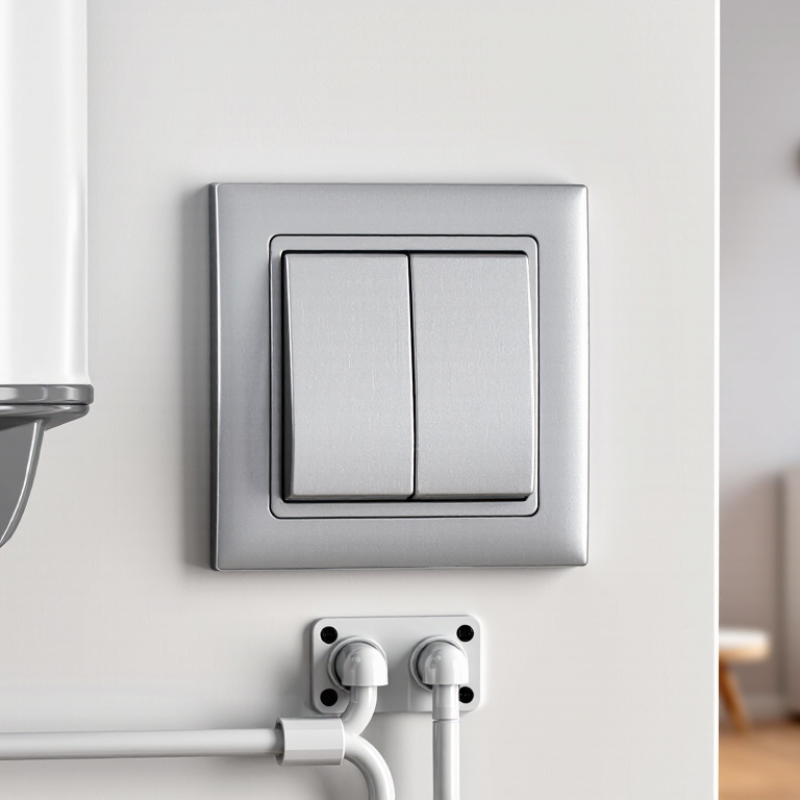
A 16A switch is designed to carry a rated current of up to 16 amperes under specified conditions. It controls a circuit by moving internal contacts together or apart. When the contacts close, current flows; when they open, the circuit is interrupted. Simple, but the rating is easy to overread.
At 230 volts, 16 amperes corresponds to about 3,680 volt-amperes. That is a theoretical calculation, not a universal safe-load promise. Motor-driven appliances, such as pumps, can draw extra current when starting, and switching performance depends on the load and the device’s rating. IEC 60669-1 is the relevant international standard for switches used in household and similar fixed electrical installations. Check the switch’s marked voltage and load type, not just “16A.” A loose connection can also cause heat, even when the current seems within range.
What Is a 16A Switch Used For?
A 16-amp rating describes the current a switch is designed to handle under specified conditions. It is not a promise that every connected appliance is suitable. The permitted voltage and load type matter too. At 230 volts, 16 amps corresponds to about 3,680 watts for a simple resistive load. A kettle or heater may appear to fit that calculation, but check the switch’s marked rating and installation instructions. That matters.
Motors, transformers, and some electronic devices can draw extra current when starting. A switch rated for a resistive load may have a lower rating for motor loads. The number looks reassuring, yet it does not tell you whether the circuit wiring or protective device is suitable. A neat calculation can still mislead. Check the appliance label, the switch specifications, and the circuit details before choosing a replacement. For a fixed installation, have a qualified electrician confirm compatibility, especially if the switch becomes warm, makes noise, or controls a heavy load. The rating is a boundary, not a target to exceed.
A 16A rating indicates the switch’s rated current capacity, subject to its specifications and installation requirements. For a resistive load, approximate power is calculated as voltage × current; actual safe use depends on the switch, circuit, load type, and local electrical rules.
What Is a 16A Switch Used For?
Common Appliances and Circuits That Use 16A Switches
A 16A switch is often used to control appliances with higher electrical loads than lighting or small electronics. Common examples include wall-mounted water heaters, room heaters, some ovens, and certain air-conditioning units. The exact appliance depends on its power rating and the electrical system where it is installed. A switch marked 16A is not automatically suitable for every appliance in that category.
These switches may be fitted to a dedicated circuit, especially for a fixed appliance such as a water heater. You might see one near a bathroom entrance or beside a kitchen appliance, with a clear label showing what it controls. That detail helps prevent confusion later. It is easy to assume that matching the switch rating to the appliance is enough, but cable size, voltage, installation method, and circuit protection also matter.
Always check the appliance instructions and the switch’s rated voltage and load type. Some motors and heating elements behave differently when switched on, so the printed current rating alone may not tell the whole story. If the circuit or wiring is uncertain, ask a qualified electrician to inspect it. A neat-looking installation can still be incorrectly rated.
| Typical appliance or load | Typical input power | Approx. current at 230 V | Why a 16A switch may be suitable | Important consideration |
|---|---|---|---|---|
| Washing machine | 2.0–2.5 kW | About 8.7–10.9 A | The current is commonly below 16 A during normal operation. | Check the appliance rating plate and the switch’s load rating. |
| Dishwasher | 1.8–2.4 kW | About 7.8–10.4 A | A suitably rated switch can provide local isolation for this fixed appliance. | Installation requirements vary by location and appliance instructions. |
| Immersion water heater | Around 3.0 kW | About 13.0 A | A 16A switch may be used where its rating and the installation design allow it. | Often supplied by a dedicated circuit; verify local wiring rules. |
| Compact electric water heater | 2.0–3.0 kW | About 8.7–13.0 A | The operating current may fit within a 16A switch rating. | Confirm the heater’s specified connection method and circuit protection. |
| Single electric oven | 2.0–3.0 kW | About 8.7–13.0 A | Some lower-power models can be switched with a correctly rated 16A device. | Larger ovens or combined cooking loads may need a higher-rated circuit and switch. |
| Electric radiator or panel heater | 1.0–2.0 kW | About 4.3–8.7 A | The load is typically within the switch’s current rating. | Follow the heater manufacturer’s instructions for fixed wiring or plug connection. |
| Microwave oven | About 1.2–1.6 kW input | About 5.2–7.0 A | A 16A-rated switch can be used for suitable local switching arrangements. | Use the electrical input rating, not the advertised cooking-output power. |
Current figures are approximate, calculated as power ÷ 230 V. Actual current depends on the appliance, supply voltage, and operating conditions. A 16A switch rating does not by itself determine the required cable size, circuit-breaker rating, or installation method. Check the appliance instructions and local electrical regulations; have fixed wiring assessed by a qualified electrician.
A 16A switch is only a suitable choice when its rating matches the circuit and the connected load. Check the supply voltage and the switch’s marked rating, not just the appliance’s advertised wattage. For a simple resistive load, current can be estimated by dividing watts by volts.
A 2,000W heater on a 230V supply draws about 8.7A. That estimate does not cover every load.
Motors, pumps, and some LED drivers can draw a brief surge when switched on. Their starting current may stress a switch rated only for ordinary resistive loads. Check the manufacturer’s load guidance and the switch’s category or motor rating. Then confirm that the cable, terminals, and circuit protection are suitable; a 16A switch does not make undersized wiring safe.
Details matter. A loose terminal can heat up, even when the load appears modest. Also check that the switch fits the enclosure and is approved for the location, especially near moisture or dust.
It is easy to focus on the number printed on the faceplate and miss the wiring conditions behind it. If those conditions are unclear, have a qualified electrician verify the circuit before installation.
A 16A switch is designed to control a circuit or appliance within its stated electrical rating. That rating alone does not confirm that a switch suits every 16-amp load. Check the supply voltage, load type, switching frequency, and whether the appliance draws a brief surge when starting. A motor or heater can place different demands on contacts. Read the switch’s markings and technical sheet, not just its front label. Small details matter.
Before installation, confirm that the circuit, conductors, and protective device are suitable for the load. Switch off the supply and verify isolation with an appropriate tester; never rely only on a wall switch being off. Terminals should hold the specified conductor size securely, with no exposed copper or trapped insulation. Check for heat, moisture, dust, or cramped enclosures that could affect performance. It is easy to overlook the enclosure. If ratings are unclear, wiring is damaged, or you cannot verify the circuit safely, have a qualified electrician select and install the switch. Even careful checks can miss a mismatch.
By continuing to use the site, you agree to the use of cookies. more information
The cookie settings on this website are set to "allow cookies" to give you the best browsing experience possible. If you continue to use this website without changing your cookie settings or you click "Accept" below then you are consenting to this.