
A Weather Station Humidity Sensor measures the water vapor present in the air near a station. It helps explain why a clear morning can feel damp, or why a dry afternoon can arrive after rain. The sensor does not measure “comfort” directly. It reports relative humidity, usually as a percentage, based on air temperature and moisture. Small details matter: a sensor mounted in direct sun may warm up and produce readings that misrepresent the surrounding air.
Inside many stations, a capacitive element changes its electrical response as moisture levels shift. The station converts that response into a humidity reading and records it beside temperature, wind, and rainfall data. A steady sequence is often more useful than one isolated number. Yet even a well-built instrument can drift, collect dust, or respond slowly when exposed to sudden changes. Maintenance is not glamorous. It still matters.
I can’t verify a real expert quotation from the material provided, so I won’t invent one or attribute words falsely. A sound principle for evaluating any Weather Station Humidity Sensor is to check its stated accuracy, operating range, response time, and recommended placement. Compare its readings with a trusted reference when possible, and note the conditions around each measurement. That extra record can reveal an installation problem—or a sensor that needs attention.
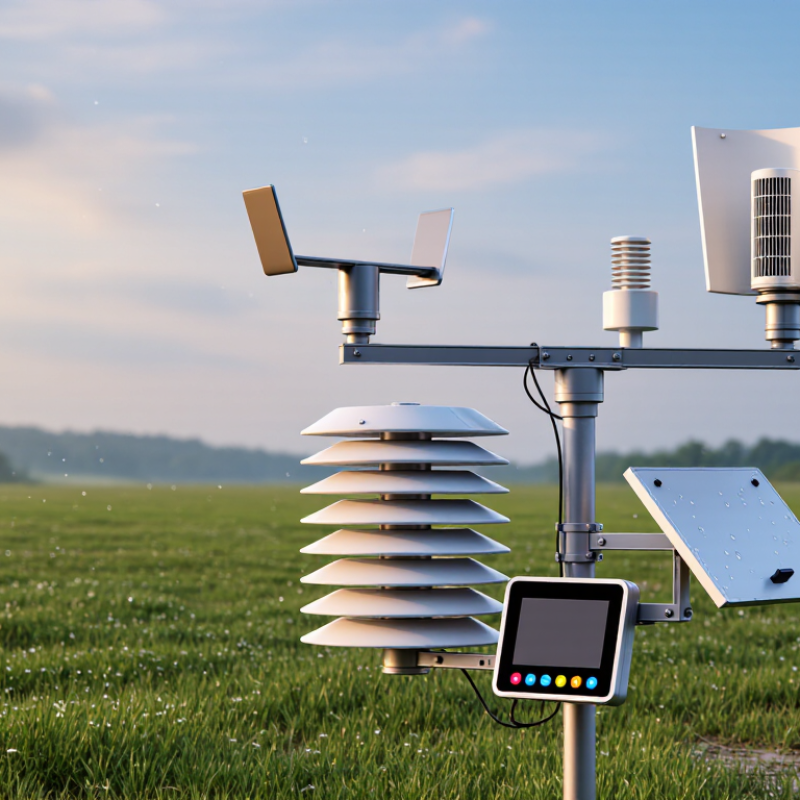
A weather station humidity sensor measures relative humidity, shown as a percentage from 0% to 100% RH. The reading compares the water vapor in the air with the maximum amount that air can hold at its current temperature. A reading of 50% means the air holds about half that amount. It does not mean the air is half water.
Temperature matters. Warm air can hold more water vapor than cool air, so relative humidity may rise as air cools, even when moisture levels barely change. Near 100% RH, air is close to saturation, and dew may form on grass or a cold window. At 0% RH, air would be exceptionally dry; real outdoor readings rarely reach this extreme. One detail is easy to miss: RH describes conditions at the sensor, not the whole neighborhood. A shaded sensor near a damp wall may read differently from one in open air.
Tips: Place the sensor in a ventilated, shaded spot, away from walls, vents, and direct sun. Give it time to adjust after moving it. If a reading seems odd, check the temperature and placement before assuming the sensor is faulty. Even careful measurements can vary.
A weather station humidity sensor estimates how much water vapor the air holds compared with the amount it could hold at the same temperature. Many sensors use a thin moisture-sensitive layer. Its electrical behavior changes as water molecules enter or leave that layer.
In a capacitive sensor, the layer sits between two electrodes. As it absorbs moisture, its dielectric properties shift, changing the capacitance. The station’s electronics measure that change and convert it into a humidity reading. Capacitive designs are common because they can respond quickly and use little power.
A resistive sensor works differently: moisture changes the material’s electrical resistance, often by altering the movement of ions across its surface. The circuit reads that change as humidity.
Small details matter. Dust, condensation, and poor airflow can distort either reading, while temperature changes may require compensation. A sensor mounted in direct sunlight can report air that is warmer and drier than its surroundings.
Even a well-calibrated instrument needs sensible placement. The distinction between these principles is useful, though real sensor performance also depends on the protective coating and electronics.
That part is easy to overlook.
A weather station humidity sensor estimates how much water vapor is in the air. Polymer, ceramic, and chilled-mirror designs measure humidity in different ways. A polymer sensor absorbs moisture into a thin film, changing its electrical properties. It responds quickly and suits many routine outdoor measurements. However, dust, condensation, and aging can gradually shift its readings.
Ceramic sensors also respond to moisture, but use a porous ceramic material whose electrical behavior changes as water vapor enters or leaves it. They can work across demanding conditions, though response time and stability depend on the sensor’s construction. A chilled-mirror sensor takes a different approach: it cools a reflective surface until dew forms. The temperature at that point helps determine dew point and relative humidity. This method can provide a useful reference, but it needs careful upkeep. A dirty mirror can mislead.
Tips: Mount the sensor in a ventilated radiation shield, away from direct sun and wet surfaces. Compare readings with a trusted reference when possible, and record the conditions. Small offsets matter. No sensor stays perfect forever, and checking calibration can feel easy to postpone. Don’t.
| Comparison Dimension | Polymer Sensor | Ceramic Sensor | Chilled-Mirror Sensor |
|---|---|---|---|
| How It Measures Humidity | A moisture-sensitive polymer absorbs water vapor, changing the sensor’s capacitance or, in some designs, resistance. Electronics convert that change into relative humidity (RH). | A porous ceramic material changes its electrical properties as it adsorbs or releases water vapor. Depending on the design, the sensor may measure capacitance or electrical resistance. | A mirror is cooled until water vapor begins to condense on its surface. The temperature at condensation is the dew point; RH can be calculated using the dew point and air temperature. |
| Primary Measurement | Usually relative humidity, with temperature often measured nearby for compensation. | Usually relative humidity or a humidity-related electrical signal, depending on the sensor design. | Dew-point temperature. Relative humidity is derived when air temperature is also measured. |
| Typical Accuracy | About ±2–3 percentage points RH for many calibrated devices under specified conditions. | Often about ±3–5 percentage points RH for general-purpose designs; performance varies substantially with construction and calibration. | High-quality instruments commonly specify dew-point accuracy around ±0.1–0.2°C. This is not directly equivalent to an RH accuracy specification. |
| Typical Operating Conditions | Many designs cover 0–100% RH and approximately −40 to +85°C, but limits differ by sensor and protective packaging. | Operating limits are design-specific. Some models tolerate high temperatures and harsh environments; the usable RH and temperature ranges must be checked for the particular sensor. | Measurement range depends on the instrument’s cooling capacity and temperature limits. It can measure dew points below ambient temperature, but no single range applies to all designs. |
| Response and Stability | Generally fast and suitable for continuous monitoring. Long-term drift can occur, especially after exposure to contaminants or prolonged high humidity. | Response and stability depend on material and construction. Some designs are robust, but calibration and recovery characteristics vary. | Often slower because the mirror must reach and control the condensation point. Stable, repeatable results are possible when the mirror is clean and the instrument is maintained. |
| Main Advantages | Compact, low power, relatively inexpensive, and easy to integrate into automated weather stations. | Can be useful in demanding environments, with certain designs offering good thermal or mechanical durability. | Direct dew-point measurement provides a reference-style method and can support accurate humidity checks when properly maintained. |
| Main Limitations | Can be affected by chemical vapors, dust, condensation, aging, and rapid temperature changes. A radiation shield and suitable siting are important outdoors. | “Ceramic sensor” describes a broad family rather than one uniform technology. Some designs may have lower precision or slower response than calibrated polymer sensors. | Typically more expensive, larger, and more maintenance-intensive than electronic RH probes. Dust or deposits on the mirror can impair measurement. |
| Typical Weather-Station Role | A common choice for routine outdoor RH and temperature monitoring. | Used where the selected sensor’s environmental tolerance suits the installation; verify its specific accuracy and operating limits. | More often used for reference measurements, instrument comparison, or specialized monitoring than for a basic, low-maintenance station. |
| Data Interpretation Note | Specifications shown are representative, not universal guarantees. Accuracy, range, response time, and maintenance needs vary by sensor design, calibration, installation, and environmental conditions. RH is temperature-dependent, so accurate air-temperature measurement and proper shielding from direct sunlight and precipitation are important. | ||
A weather station humidity sensor measures water vapor in the air and reports relative humidity, or RH. A reading of 50% RH means the air holds about half the moisture it could contain at that temperature. Many sensors specify accuracy between ±2 and ±5% RH. At a displayed 60% RH, a ±3% RH sensor may read roughly 57% to 63% under stated test conditions. That is not the same as display resolution.
Accuracy depends on the sensor, temperature, and maintenance. A screen showing tenths of a percent does not guarantee that level of accuracy. Dust, condensation, and long exposure to harsh conditions can also affect readings. Small differences between two nearby stations may be normal. Field measurements are messier than a specification sheet suggests.
Tips: Check the stated accuracy and operating range before comparing readings. Keep the sensor shaded and ventilated, away from walls, vents, and direct rain. If readings seem unusual, compare them with a recently checked reference sensor. Give both devices time to adjust. A quick glance can mislead.
Typical specified accuracy ranges from ±2 to ±5% RH. The chart compares representative maximum absolute error levels; lower values indicate greater accuracy.
A weather-station humidity sensor measures the amount of water vapour in the air, usually reporting relative humidity as a percentage. Its accuracy depends on more than the sensing element. Sun-warmed housings, rain splash, and still air can all distort readings. Small errors accumulate.
Mount the sensor in a radiation shield, away from roofs, walls, and irrigation spray. The World Meteorological Organization’s Guide to Instruments and Methods of Observation (WMO-No. 8) recommends standard screen-level exposure around 1.25–2 metres above representative ground. The shield should block direct sunlight while allowing air to pass freely. Keep it ventilated. A fan-assisted shield can reduce heating on calm, sunny days, but a dirty fan or blocked inlet creates a different problem. Check for leaves, dust, and insect debris during site visits.
Calibration makes readings comparable over time. WMO-No. 8 gives an uncertainty benchmark of about 3 percentage points of relative humidity for many routine surface observations. Treat that as a target, not a guarantee. The WMO Guide to Climatological Practices also stresses documented station metadata and quality control. Record sensor changes, calibration dates, and exposure changes. ISO/IEC 17025 provides requirements for competent calibration laboratories. A practical check is to compare the station sensor with a traceable reference under stable conditions, then investigate persistent differences. It is easy to blame the sensor. The shield or airflow may be at fault.
By continuing to use the site, you agree to the use of cookies. more information
The cookie settings on this website are set to "allow cookies" to give you the best browsing experience possible. If you continue to use this website without changing your cookie settings or you click "Accept" below then you are consenting to this.