
Blog

What Is Adhesive Sealant and What Is It Used For?

Adhesive Sealant is more than a sticky material squeezed from a tube. It bonds surfaces and helps close gaps against water, air, dust, and movement. You might find it around a kitchen sink, along a window frame, or between panels exposed to weather. The exact job depends on the product. Some formulations prioritize a strong bond; others remain flexible as materials expand and contract. Choosing by label alone can be a mistake.

Adhesion scientist Alphonsus Pocius, author of Adhesion and Adhesives Technology, offers a useful perspective. As a paraphrase of his technical work: “A reliable bond depends on the surfaces, the material, and the conditions around the joint.” That principle matters in everyday projects. A bead applied over greasy tile may peel, while a compatible product on a clean, dry surface can perform far better. Small details count.

Not every sealant is an adhesive, and not every adhesive seals a joint. Some products do both. Their uses range from bathroom repairs and glazing to automotive assembly and construction joints. Temperature, moisture, movement, and substrate compatibility all affect performance. So does preparation. Read the product instructions, and allow the recommended curing time. It can feel like a minor step. It isn’t. This guide explains how Adhesive Sealant works, where it is used, and what to consider before choosing one. Real surfaces are rarely perfect, so even a well-chosen product may need careful application and maintenance.
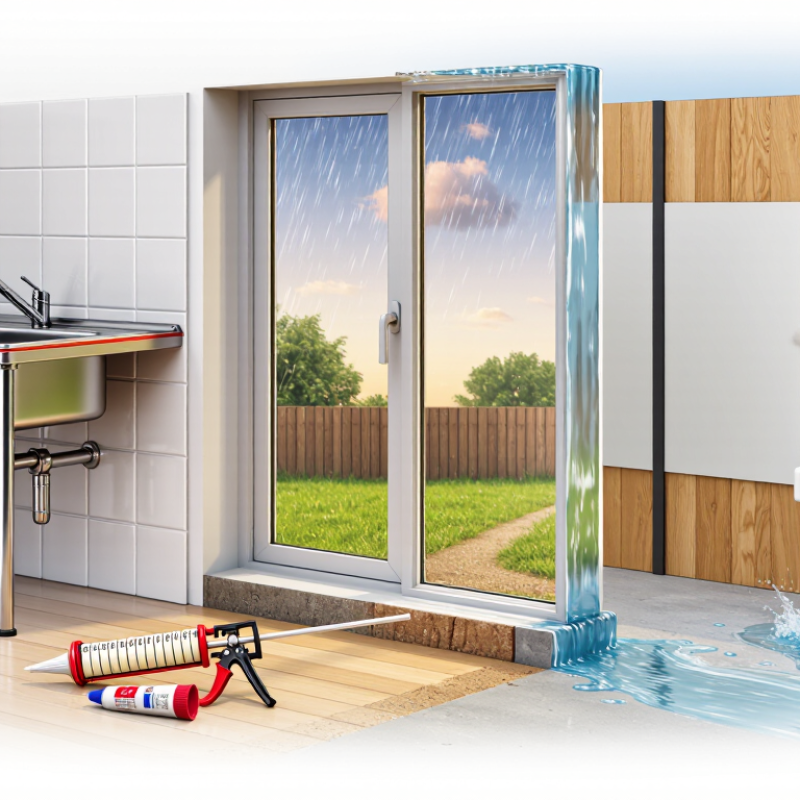
What Is Adhesive Sealant and What Is It Used For?

What Is an Adhesive Sealant? A Material for Bonding and Sealing

An adhesive sealant does two jobs: it bonds surfaces and blocks gaps where air, water, or dust might pass. It is often supplied as a paste or cartridge-applied compound. After application, it cures or dries into a flexible or firm layer, depending on its chemistry. It is not a universal glue. The right choice depends on the materials, joint design, and conditions around the bond.

Picture a bead along a window frame or between two metal panels. The sealant must grip both surfaces while accommodating some movement from temperature changes or vibration. Some formulations suit porous materials such as concrete; others are designed for glass, metal, or plastics. Check compatibility before use. A sealant that adheres well to one surface may bond poorly to another, especially if it is dusty, oily, or damp.

Preparation matters. Clean the joint, remove loose material, and apply the bead evenly. Follow the product’s instructions for curing time and temperature; a dry-looking surface may still be soft underneath. A common mistake is choosing by color or convenience alone. Even a tidy bead can fail. For load-bearing or safety-critical joints, verify that the material is rated for that specific application. The details are easy to overlook.

What Is Adhesive Sealant and What Is It Used For? - What Is an Adhesive Sealant? A Material for Bonding and Sealing

Topic Description Typical examples or considerations
Definition An adhesive sealant is a material designed to bond surfaces while also filling a joint or gap to help block the passage of air, water, dust, or other substances. It combines functions that may otherwise be handled by a separate adhesive and sealant.
How it works The material is applied between surfaces, then develops adhesion and, depending on its chemistry, cures or dries into a flexible or rigid joint. Some products cure by reacting with moisture in the air; others cure through chemical mixing or by losing a carrier.
Common material types Formulations vary in flexibility, strength, weather resistance, cure behavior, and suitability for particular materials. Common families include silicone, polyurethane, acrylic, and hybrid polymer sealants.
Construction joints Used to bond or seal joints where building components meet, including joints that may move slightly as temperatures or loads change. Examples include joints around window and door frames, cladding, and some interior trim.
Automotive and transport Used in selected assembly and repair applications to join components or seal seams against moisture, dust, and vibration. The product must be suitable for the relevant substrate, temperature range, movement, and exposure conditions.
Marine and outdoor use Some formulations are designed to withstand weathering or intermittent water exposure while maintaining a bonded seal. Check whether the product is rated for the specific exposure; not every adhesive sealant is suitable for continuous immersion.
Suitable substrates Compatibility depends on the formulation and surface condition. Many products bond to common materials, but performance varies. Possible substrates include glass, metal, concrete, masonry, wood, and some plastics. Verify compatibility before use.
Movement and flexibility Flexible products can accommodate a specified amount of joint movement; the permitted movement varies by product and joint design. For moving joints, follow the product’s movement rating and recommended joint dimensions.
Application basics Surfaces are generally prepared to be clean and free of loose material, oil, and other contaminants. The sealant is applied into the joint and tooled as directed. Primer, backing material, application temperature, and bead shape may affect performance; consult the product instructions.
Cure time Cure time is not the same for every material and depends on factors such as chemistry, temperature, humidity, and bead thickness. Allow the stated cure time before exposing the joint to water, movement, or load, as applicable.
Choosing a product Match the sealant to the substrates, joint movement, environmental exposure, required bond strength, and finishing needs. Review the technical data and safety instructions, and test adhesion on an inconspicuous area when compatibility is uncertain.

How Do Adhesive Sealants Work? Adhesion, Cohesion, and Curing

Adhesive sealants do two jobs: they bond surfaces and block gaps. Their performance depends on adhesion, cohesion, and curing. Adhesion is the grip between sealant and the surface. Cohesion is the strength within the sealant itself. Both matter. A bead may cling to tile yet split down its middle if its internal strength is poor.

When applied, the sealant wets the surface and makes close contact with it. Dust, oil, or moisture can interrupt that contact. Some products cure as moisture enters; others cure through evaporation or a chemical reaction. The process may take hours or longer, depending on the material, bead depth, temperature, and humidity. A dry-looking skin does not always mean the center has cured. That detail is easy to overlook. Sealants also differ in flexibility, so the right choice depends on movement, exposure, and the materials being joined.

Tips: Clean and dry surfaces as the product instructions require. Cut the nozzle for a bead that fits the gap, then smooth it before a skin forms. Avoid loading the joint too soon. If a test patch pulls away or cracks, pause and check surface preparation and product compatibility; guessing can waste more time than redoing the bead.

Which Types Are Used? Silicone, Polyurethane, SMP, and Epoxy

Adhesive sealants both bond surfaces and block water or air, but their chemistry determines how they behave. Silicone stays flexible and handles sunlight, moisture, and temperature changes well, making it common around windows, glass, and bathrooms. Polyurethane generally offers strong adhesion and abrasion resistance, useful for concrete joints and vehicle seams. SMP, or silane-modified polymer, balances flexibility and adhesion; many formulations also accept paint. Epoxy forms a hard, strong bond, but usually tolerates less joint movement than elastomeric sealants. It suits repairs and bonding rigid parts, not every moving gap.

ASTM C920 classifies elastomeric sealants by movement capability. For example, Class 25 indicates the sealant can accommodate joint movement of ±25% of its original width under specified testing. That figure is a helpful screening point, not a guarantee for every installation. A common mistake is choosing by “strength” alone; joint movement, surface material, weather, and cure conditions matter too. The distinction can be easy to miss.

Tips: Measure the joint and check the product’s technical data sheet before application. For a 10 mm joint, a Class 25 rating corresponds to 2.5 mm movement in either direction under the standard’s test conditions. Keep surfaces clean and dry when required, and allow the stated cure time. A rushed cure can undermine a good-looking bead.

Where Are Adhesive Sealants Used in Construction, Vehicles, and Industry?

Adhesive sealants both join surfaces and block air, water, dust, or vibration. In construction, crews use them around window frames, façade panels, roof joints, and bathroom fixtures. A flexible sealant can accommodate small movements as buildings expand or settle. For example, it may close a narrow gap between a window frame and masonry while helping limit drafts and rainwater entry. The right product depends on the materials, joint width, expected movement, and exposure to sunlight or moisture. Small gaps matter. A sealant cannot compensate for a poorly designed joint or a damp, dirty surface.

In vehicles, adhesive sealants help seal windshields, lamps, doors, and body seams. They can also reduce rattling and vibration when parts move on rough roads. In industrial settings, they are used on equipment covers, ducts, enclosures, and some pipe connections, where leakage or contamination must be controlled. Application conditions vary: a product suited to a sheltered indoor joint may not withstand heat, oils, or weather outdoors. Not every product fits. That distinction is easy to overlook, even on familiar repairs.

Tips: Check the technical data sheet for surface compatibility, application temperature, cure time, and movement capacity. Clean and dry the surfaces as directed, then allow the sealant to cure before loading the joint. If adhesion is uncertain, test a small area first.

What Is Adhesive Sealant and What Is It Used For?

Adhesive sealants bond surfaces while helping block water, air, dust, or vibration. They are used across construction, vehicles, and industry.

How to read this chart: Bars count common example applications listed for each sector; they do not represent market share or usage volume.

How Is Performance Classified? ASTM C920 Movement Classes from 12.5 to 100/50

ASTM C920 classifies elastomeric sealants by tested joint movement, not by strength alone. Its movement classes include 12.5, 25, 35, 50, and 100/50. The figures describe the movement a sealant can accommodate as a percentage of the installed joint width. For a 10 mm joint, a 12.5 class corresponds to about 1.25 mm of movement; a 50 class corresponds to about 5 mm. The 100/50 class indicates 100% extension and 50% compression. These classifications come from ASTM C920, while ASTM C719 describes cyclic movement testing for adhesion and cohesion. Small numbers matter.

Class selection depends on expected movement, joint design, and the sealant’s compatibility with the surfaces. A narrow gap between concrete panels may need a different rating from a wide façade joint exposed to large temperature swings. Check the anticipated joint width and movement range, then confirm the product’s tested class and installation requirements. A neat class number can still mislead: poor surface preparation, incorrect joint depth, or unsuitable backing material can undermine performance. Real joints are less tidy than drawings suggest. Cite the applicable ASTM standards and project specifications when documenting a selection; do not treat a movement class as a guarantee of service life.

By continuing to use the site, you agree to the use of cookies. more information

The cookie settings on this website are set to "allow cookies" to give you the best browsing experience possible. If you continue to use this website without changing your cookie settings or you click "Accept" below then you are consenting to this.

Close