Why Choose a Shipbuilding Panel Line?
A Shipbuilding Panel Line is more than a row of welding stations. It coordinates plate handling, panel assembly, welding, and movement through the yard. When the layout fits the vessel program, steel plates can move through clear, repeatable stages. Operators can check alignment before long seams are welded. Cranes, fixtures, and work instructions must work together. Small delays still matter.
Production-engineering pioneer Taiichi Ohno wrote, “Where there is no standard, there can be no kaizen.” That principle applies to panel fabrication: consistent work methods make defects easier to spot and improvements easier to test. A well-planned line can reduce unnecessary handling, support steadier output, and improve access to inspection points. The gains depend on the shipyard’s panel mix, workforce skills, equipment condition, and production planning. A line is not a cure-all.
The practical question is not simply whether automation looks impressive. It is whether the system suits the panels a yard actually builds. A curved section may need different fixtures and handling from a flat plate. Poorly matched equipment can create bottlenecks instead of flow. Even a neat layout can fail when maintenance, training, or material supply is overlooked. That deserves a second look. For shipbuilders comparing investment options, understanding these trade-offs is central to deciding why to choose a Shipbuilding Panel Line—and what conditions will make it worthwhile.
What a Shipbuilding Panel Line Is and How It Works
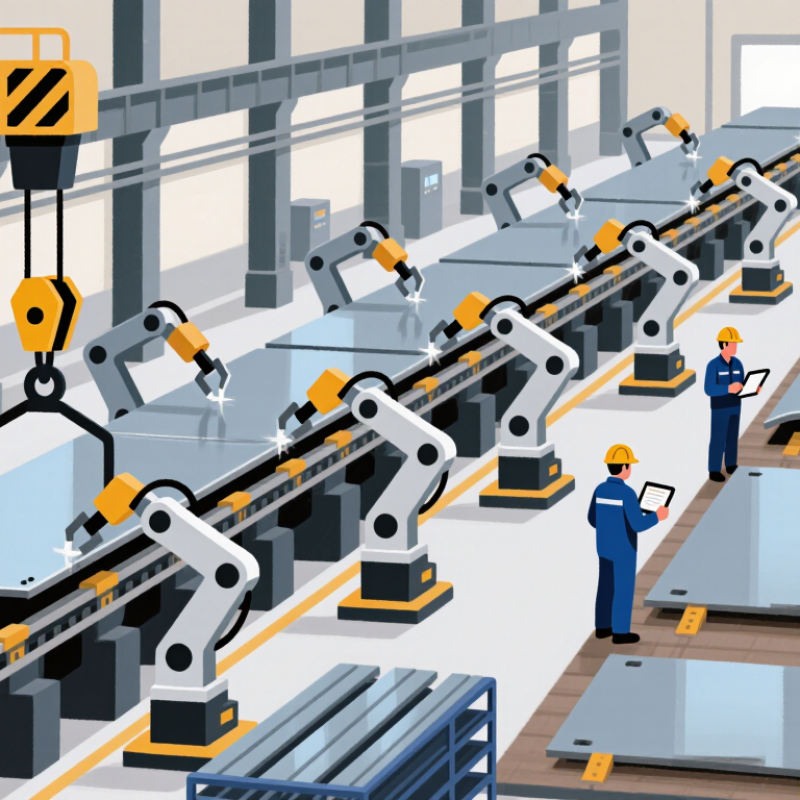
A shipbuilding panel line is a production system for making large, flat hull sections from steel plates and stiffeners. Rather than building each section entirely by hand, the line moves parts through a sequence of preparation, assembly, welding, and inspection stations. The exact arrangement varies with panel size, steel thickness, and yard workflow.
Work often begins with plate marking and cutting, followed by edge preparation. Stiffeners are positioned on the plate and secured before welding joins them into a stronger panel. Conveyors or rollers help move heavy sections between stations, while fixtures keep parts aligned. Some lines use mechanized welding and controlled heating to reduce distortion. Operators still check fit-up, weld quality, and dimensions; automation does not remove the need for skilled judgment.
Small errors travel. A misplaced stiffener can affect later assembly, so measurement and alignment matter early. After welding, crews may straighten the panel and inspect it for visible defects or dimensional variation. The line can make repeated work more consistent, but it is not a magic shortcut: different panel shapes and changing production demands can interrupt a smooth flow. In practice, the best setup is the one that matches the shipyard’s materials, space, and work habits. Even experienced teams need to review what is not working.
How Panel Lines Connect Cutting, Assembly, and Welding
Why Choose a Shipbuilding Panel Line?
How Panel Lines Connect Cutting, Assembly, and Welding
A shipbuilding panel line connects plate cutting, panel assembly, and welding in a controlled production sequence. The goal is not simply faster output. It is to move each plate forward with fewer unnecessary lifts and clearer checks. A cut plate arrives with marked edges and openings, ready for alignment. Small inaccuracies can still appear. That matters.
During assembly, workers position stiffeners and other components against the plate using fixtures and measured references. The fit-up stage is where a slightly misplaced part can create trouble later. Tack welds hold the structure while the team checks dimensions and alignment. Then welding joins the parts into a panel. Heat can pull thin plate out of shape, so weld sequence and restraint need careful planning. The handoff is not always perfect.
A connected line makes those handoffs easier to manage. Cutting data can guide the next operation, while inspection results help flag rework before a panel moves downstream. Clear markings also help crews identify parts without relying on memory. Still, a panel line cannot replace skilled judgment. Different plate thicknesses, panel sizes, and shop conditions call for adjustments. A practical line leaves room for those decisions, rather than treating every panel as identical.
How Automation Improves Production Speed and Accuracy
A shipbuilding panel line uses automated cutting, marking, positioning, and welding to turn large steel plates into repeatable assemblies. Sensors can check plate alignment before a cut, while programmed weld paths help maintain consistent travel speed and spacing. That reduces manual remeasurement and avoidable rework. It also gives supervisors traceable production data, such as cycle times and fault locations. Small deviations still matter: a plate shifted by a few millimeters can complicate fit-up later.
The International Federation of Robotics reported a global average of 162 industrial robots per 10,000 manufacturing employees in 2023, in World Robotics 2024. McKinsey’s 2015 Industry 4.0 report estimated that digital manufacturing could raise labor productivity by 10–30%; this is a cross-industry potential, not a shipyard guarantee. For panel-line planning, the practical value depends on material flow, operator training, and reliable maintenance. A robot cannot correct poor plate preparation. Not magic. Even accurate automation can create bottlenecks when cranes, welding stations, or downstream assembly cannot keep pace. Teams should compare defect rates and cycle times before and after installation, then adjust the process. One awkward reality: the cleanest data may expose old workflow problems rather than solve them.
Why Choose a Shipbuilding Panel Line?
Illustrative comparison of production time and rework in a conventional workflow versus an automated panel line. Actual results vary by vessel design, equipment, materials, and operating conditions.
How Panel Lines Support Quality and Workplace Safety
A shipbuilding panel line brings plate cutting, fit-up, welding, and inspection into a more controlled workflow. Repeatable positioning helps keep panel dimensions consistent, while recorded measurements can reveal drift before it spreads across later assemblies. Small gains matter. Yet a line cannot compensate for poor material preparation or rushed inspection; those problems may simply move downstream faster.
Workplace safety depends on how the line is designed and operated. Mechanical handling can reduce some manual lifting and repositioning, but conveyors and fixtures introduce pinch points, and welding still creates fume, heat, and eye hazards. The International Labour Organization’s 2023 global estimates report 2.93 million work-related deaths and 395 million non-fatal work injuries each year. These figures are not specific to shipyards, but they underline why risk controls deserve attention. Guarding, local exhaust ventilation, clear walkways, and hands-on training should accompany automation. Automation is not a cure. Operators also need safe access for cleaning and maintenance, where procedures can be overlooked during a busy shift. A well-planned panel line supports consistent work; its real performance still depends on people, upkeep, and honest checks.
What to Consider When Choosing a Panel Line
Why Choose a Shipbuilding Panel Line?
What to Consider When Choosing a Panel Line
A shipbuilding panel line should match the panels your yard actually builds, not just its target output. Start with typical plate dimensions, thickness ranges, stiffener layouts, and expected production mix. Check whether the line can handle awkward variations without frequent manual repositioning. A neat specification sheet may not reveal that problem.
Study the full process, from plate loading and marking to welding, handling, and panel discharge. Confirm how the equipment connects with existing cranes, work areas, and downstream assembly. Fit matters. Measure the available floor space, including room for maintenance access and material movement. A faster line is not automatically better; it can simply move the bottleneck elsewhere.
Ask suppliers to demonstrate representative panels and agree on practical measures, such as cycle time, weld quality, and changeover effort. Test it. Consider operator training, spare-part access, and how quickly common faults can be diagnosed. Automation can reduce repetitive work, but it still needs capable staff and clear procedures. One estimate may look convincing, then prove optimistic once real plate variation and schedule interruptions appear. Leave room in the evaluation for those less tidy realities.