Why Do Police Van Sirens Sound Different?
The sound of a Police Van Siren is distinct and attention-grabbing. Many people often wonder why these sirens vary in tone. Different siren sounds serve a crucial purpose. They alert the public and signal urgency. Each sound has a unique characteristic designed to convey specific messages.
The frequency and pattern of the Police Van Siren can create confusion for some. Why do some sirens wail while others produce a fast, electronic tone? Such nuances might seem trivial, but they play a role in how effectively people respond.
In daily life, we often become desensitized to sirens. The rising hum or sudden blast can easily blend into the background noise. Yet, the design of these sirens deserves more thought. Why do we react differently to certain sounds? This question leads us to explore the fascinating world of emergency vehicle communication. Understanding this can deepen our appreciation for the purpose behind the Police Van Siren.
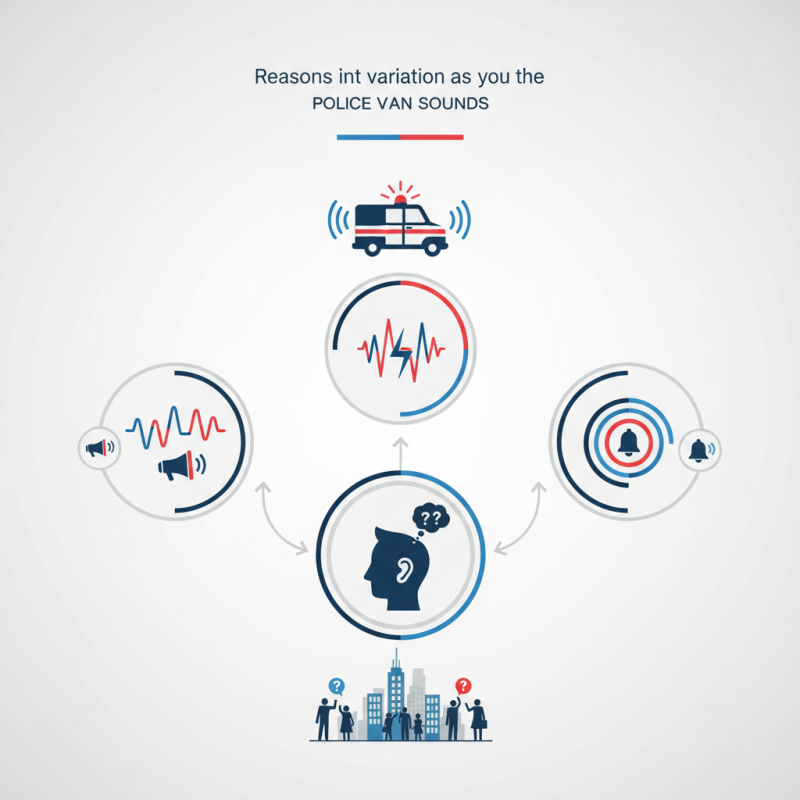
Understanding the Purpose of Different Police Siren Sounds
Police sirens produce various sounds for distinct purposes. Each sound serves to communicate urgency and intention. One might notice the difference in tones between a typical emergency response and a routine patrol. The wailing siren is often used when speed is crucial. It signals to drivers and pedestrians to clear the way. In contrast, a low rumble is usually employed during traffic stops or routine checks. This sound is less alarming but still demands attention.
The choice of sound can reflect the situation. For example, a rapid, high-pitched tone alerts individuals in busy areas. It cuts through noise and ensures visibility. However, in quieter neighborhoods, softer sounds may be preferred to avoid panic. Not every sound is perfect for every scenario. Sometimes, the pitch can be too jarring or the rhythm inconsistent. These variations can lead to confusion about the police's intent. People might hesitate when they hear a siren, unsure of what action to take. This complexity reveals how sound shapes our interactions with law enforcement.
The Science Behind Siren Sound Frequencies and Patterns
Police van sirens produce distinct sounds due to their unique frequencies and patterns. The frequency of a siren influences how well it is heard in different surroundings. Research published in the Journal of Acoustics indicates that sirens operating between 500 to 1,000 Hz are most effective in urban environments. This frequency range cuts through background noise effectively.
Different siren patterns also play a significant role. The “wail” and “yelp” are popular choices. The “wail” is slow and penetrative, while the “yelp” is quick and startling. A study from the National Institute of Justice notes that the yelp pattern can be recognized more quickly, which is crucial in emergency situations. Yet, not everyone responds effectively. Some individuals may become desensitized to siren sounds, leading to delayed reactions.
Hearing ability varies across populations. Factors such as age, hearing loss, and context can affect how well a siren is perceived. People may miss these sounds in busy areas. This highlights the need for continuous research into improving these audio signals. Increasing diversity in siren design could enhance public safety, but few explore this option seriously. Would more effective sounds make a difference? It's a complex question worth investigating.
Variations in Siren Sounds Across Different Emergency Services
Emergency service vehicles, such as police vans, ambulances, and fire trucks, have distinct siren sounds. These variations serve different purposes. For instance, police sirens often use a "wail" or "yelp" sound. This helps to grab attention quickly in urban areas. The sharper tones, like the "yelp," cut through ambient noise. It’s a tactic to clear traffic more effectively.
On the other hand, ambulances typically use a more rhythmic pattern. Their sirens often combine high and low tones. This creates an urgent feeling without being overly harsh. It aims to alert drivers while maintaining a sense of urgency and care. Fire truck sirens might include multiple sound patterns as well. They can indicate varying levels of urgency for different fire responses.
These differences make us think about how sound affects human behavior. It's fascinating that such audio cues are rooted in psychology. They can prompt immediate reactions in stressful situations. Each siren sound carries a unique message. However, not everyone may respond as intended. Some may not hear them. Others may feel anxious when they do. It highlights the importance of continuous assessment and adaptation in communication methods for emergency services.
Cultural and Regional Differences in Police Siren Design
Police sirens vary widely across cultures and regions. These differences often stem from historical, environmental, and social factors. A study published in the "Journal of Sound and Vibration" indicates that urban areas may prefer higher frequency sounds. This helps in cutting through the noise of city life. In quieter rural regions, lower frequencies tend to dominate. They may resonate better over long distances.
Cultural significance also plays a role. For example, in some countries, sirens evoke urgency and panic. In others, they symbolize a sense of safety. According to the International Institute of Sound Studies, about 75% of emergency responders report the need for regionally tailored sirens. The idea is to ensure people understand the purpose clearly. Awareness of these differences can enhance public safety. Yet some regions still struggle to adopt ideal siren designs. It raises questions about effectiveness and community trust in emergency services.
Certain regions use wailing sounds, while others prefer a steady tone. A report from the Global Emergency Management Forum shows that 60% of officers believe a unified system could improve response times. Yet, merging these systems might overlook local needs. Public perception varies greatly. Each community may feel differently about the noise and the meanings attached to sirens.
Why Do Police Van Sirens Sound Different? - Cultural and Regional Differences in Police Siren Design
| Country/Region | Siren Type | Frequency Range (Hz) | Purpose | Cultural Influence |
| United States | Wail | 600-1200 | Emergency response | Aggressive & Attention-grabbing |
| United Kingdom | Two-tone | 500-1000 | Routine and emergency | Less aggressive, more melodic |
| Germany | Yelp | 600-800 | Emergency alerts | Distinct and urgent sounding |
| Japan | Phaser | 400-1200 | Traffic control | Subtle and harmonious |
| Australia | Hi-lo | 600-1000 | Emergency response | Informative and engaging |
The Impact of Siren Sounds on Public Awareness and Safety
Siren sounds play a crucial role in public safety. Different frequencies impact how quickly people respond. According to a 2019 study by the National Highway Traffic Safety Administration, this response time can be reduced by up to 60% with the right sound. In urban areas, sirens using higher frequencies are often more effective. They cut through background noise like traffic and chatter.
However, not everyone interprets these sounds the same way. Some may find them alarming, while others might be desensitized. A report by the Journal of Emergency Services suggests that frequent exposure can lead to a diminished response. It's essential for audio signals to remain effective without becoming background noise.
Tips: When you hear a siren, try to stay calm. Pull over swiftly and safely. Familiarize yourself with the different siren sounds in your area. Understanding what each sound indicates can help you respond appropriately. Awareness is key to maintaining safety in our communities.