
Medical Roll Paper is a familiar sight in clinics: a fresh sheet stretches across the examination table before each patient sits down. It creates a clean, disposable surface and helps staff reset rooms quickly. But it is not a substitute for hand hygiene or cleaning and disinfecting reusable equipment.
The need for careful routines is clear. The World Health Organization’s 2022 Global Report on Infection Prevention and Control estimates that, in acute-care hospitals, about 7 in 100 patients in high-income countries and 15 in 100 patients in low- and middle-income countries acquire at least one healthcare-associated infection during care. These figures describe infection burden; they do not measure the effect of examination-table paper. That distinction matters. Infection-prevention expert Dr. William A. Rutala has emphasized the importance of cleaning and disinfection in reducing transmission risks. His guidance supports a practical point: disposable paper can contribute to room turnover, but it cannot do the whole job. A torn sheet, a poorly fitted roll, or a missed wipe-down can undermine an otherwise tidy setup. Small details count.
This guide examines why providers use Medical Roll Paper, what it can—and cannot—do, and which practical features matter when choosing a roll. The goal is clear: understand its role without overstating its protection.
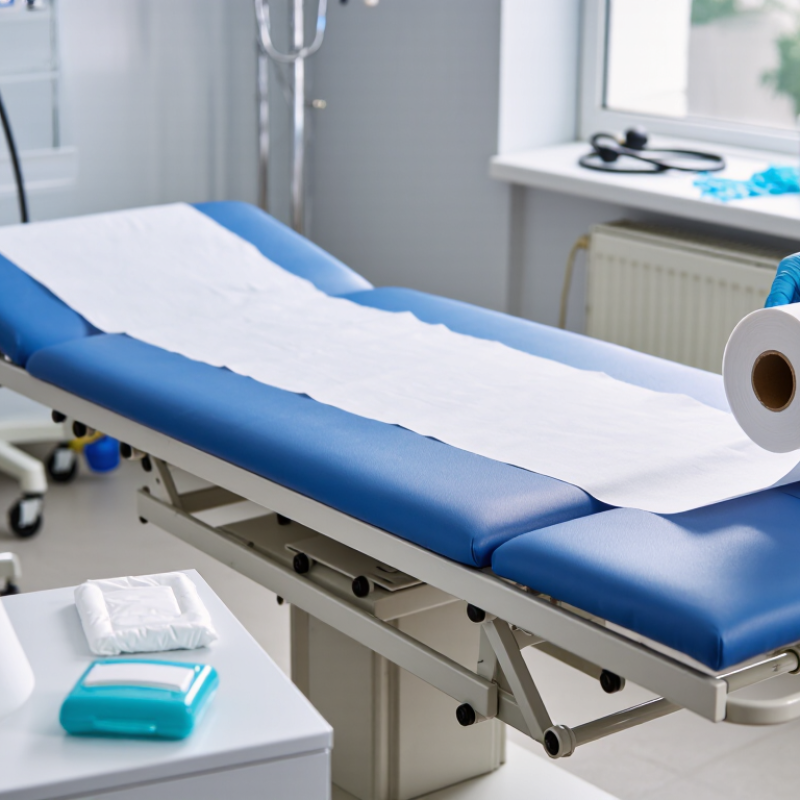
Medical roll paper is a continuous sheet wound around a cardboard core. In clinics, it commonly covers examination tables, creating a fresh surface between patients. It is usually made from paper pulp, though sheet weight, texture, and number of plies vary by intended use. Some rolls are perforated, making it easier to tear off a measured length. Simple, but useful.
Manufacturing begins with wood or recycled fibers mixed with water to form pulp. The pulp is screened, spread into a thin layer, and pressed to remove water. Heated rollers dry and smooth the sheet before it is wound into large parent rolls. Converting equipment then cuts those rolls to narrower widths, adds perforations when specified, and rewinds the paper onto cores. Quality checks may examine roll dimensions, sheet strength, winding consistency, and visible defects. These details matter: a roll that tears unevenly can slow routine room preparation. Paper is not a sterile barrier, however, and its quality should not be confused with infection-control measures. Even a neat-looking sheet has limits. Choosing a suitable grade depends on the table, the workflow, and how much coverage staff need.
Medical roll paper is most visible on examination tables in primary-care offices, community clinics, and urgent-care rooms. Staff pull a fresh section across the table before a patient lies down, then tear it away after the visit. CDC’s 2019 National Ambulatory Medical Care Survey estimated about 1 billion physician-office visits that year. That volume helps explain why quick, consistent table turnover matters. The report counts visits, not paper use.
Roll paper also appears in procedure rooms, dental practices, physical-therapy clinics, and some imaging areas. A therapist may cover a padded treatment table; a clinician may use it beneath a patient during a brief examination. In dental settings, it can cover a headrest or nearby work surface. Small details matter. Paper should fit the surface without bunching, and staff still need to clean the table between patients.
Emergency departments are another possible setting, especially for exam stretchers. CDC’s 2019 National Hospital Ambulatory Medical Care Survey recorded roughly 151 million emergency-department visits. This figure describes patient visits, not demand for disposable paper. Use also varies by facility, workflow, and surface type; paper is not a substitute for cleaning or a sterile barrier. Sometimes, it is simply practical.
| Healthcare Setting | Where the Roll Paper Is Used | Purpose | Practical Consideration |
|---|---|---|---|
| Primary care and general practice | Across examination tables between patient visits | Provides a fresh, disposable layer between the patient and the table surface. | Replace the paper between patients; it does not replace cleaning and disinfection of the table. |
| Outpatient and specialty clinics | On examination couches used for consultations and physical assessments | Helps keep the patient-contact surface covered and makes room turnover more convenient. | Choose a roll width that adequately covers the usable table surface. |
| Physical therapy and rehabilitation | On treatment tables during assessments or selected treatments | Offers a replaceable surface layer for patients using shared treatment equipment. | Use a paper type and fit appropriate for the activity; paper is not a substitute for equipment cleaning. |
| Women’s health and obstetric care | On examination tables in consultation and assessment rooms | Creates a disposable covering that can be changed after each patient. | Follow the facility’s infection-prevention procedures and use additional protective barriers when indicated. |
| Dental practices | On compatible patient chairs or examination surfaces | Helps provide a fresh surface layer where roll paper is suitable for the equipment. | Use the cover specified for the chair and follow the practice’s cleaning and barrier protocols. |
| Diagnostic and procedure rooms | On examination or procedure tables when appropriate for the equipment and task | Provides a disposable layer for routine patient contact. | Use suitable fluid-resistant barriers when exposure to fluids is possible; ordinary paper may not provide fluid protection. |
Medical roll paper is generally used as a disposable surface covering. It should be changed between patients and used alongside, not instead of, the cleaning and disinfection procedures required for shared equipment.
Medical roll paper gives examination tables a fresh, disposable surface between appointments. A clinician can pull a clean section across the table, covering areas patients are likely to touch. The paper helps limit direct contact with upholstery and catch ordinary soil, such as loose hair or skin flakes. It is not a substitute for cleaning or disinfection. That distinction matters.
After each patient, staff remove and discard the used sheet, then prepare the table according to clinic procedures. A fresh layer can help keep the headrest and arm supports covered. If the paper is torn, damp, or too narrow for the contact area, it offers less useful coverage. Small details count.
In a busy examination room, a dispenser keeps replacement paper close at hand. Staff should pull enough to cover the surface and check that it stays in place when a patient sits down. Paper can shift, especially near the edges, so a quick adjustment may be needed. That step is easy to miss on a rushed day. Keeping unused rolls dry and protected helps maintain a clean supply.
Why Do Healthcare Providers Use Medical Roll Paper?
Medical roll paper creates a fresh surface for each patient on an examination table. Its performance depends on more than appearance. Width should cover the contact area without bunching at the edges, while the roll length affects how often staff need to replace it.
Paper weight and ply influence strength and feel. A sheet that tears when pulled can slow room turnover. A rough or crinkly surface may feel uncomfortable against bare skin, especially during longer appointments. Softer paper can improve comfort, but softness alone does not tell you how well it will hold up. Check whether the sheet stays intact during routine movement. There is a trade-off.
Perforations help staff separate sheets quickly, though spacing should suit the table and the amount of coverage needed. Absorbency matters when small amounts of moisture are expected, but roll paper is not a substitute for protective barriers or cleaning procedures. Storage also counts: keep rolls dry and covered so dust or moisture does not compromise the surface. One detail is easy to miss: a roll that fits the dispenser poorly may loosen, drag, or waste sheets. Test handling in the actual room when possible; product descriptions cannot capture every table, dispenser, or patient preference.
Medical exam-table paper is available in different widths to fit different tables. These are examples of commonly offered roll widths; availability varies by supplier. A fresh sheet provides a disposable surface for each patient, but it does not replace cleaning and disinfecting the table.
A fresh sheet of medical roll paper gives each patient a clean surface, but the paper itself is not a substitute for cleaning. CDC environmental infection-control guidance calls for cleaning and disinfecting examination surfaces between patients. Staff should therefore check the table after every visit, remove the used sheet, inspect the surface, and apply the facility’s approved cleaning procedure. A torn edge or damp patch is a practical cue to replace the paper sooner.
Choosing a roll means matching its width and length to the examination table, then weighing tear resistance against storage space and waste. A paper that tears while a patient turns creates extra handling; an oversized sheet can end up on the floor. Small details matter. Keep rolls dry, protected from splashes, and easy to reach without crossing clean supplies. There is no universal replacement interval: follow the product instructions and local infection-control policy, and change the sheet between patients.
Disposal depends on what touched the paper. The World Health Organization’s health-care waste guidance estimates that about 85% of health-care waste is general, non-hazardous waste, while roughly 15% is hazardous. Used table paper is not automatically hazardous; staff should follow facility rules and treat visible contamination according to policy. The U.S. EPA’s Advancing Sustainable Materials Management report identifies paper and paperboard as a major share of municipal solid waste, a reminder that routine disposables add up. Recycling may not be suitable for soiled sheets. The awkward part is that clean-looking paper can still have contacted a used surface. Don’t guess.
By continuing to use the site, you agree to the use of cookies. more information
The cookie settings on this website are set to "allow cookies" to give you the best browsing experience possible. If you continue to use this website without changing your cookie settings or you click "Accept" below then you are consenting to this.